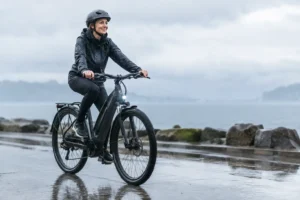
A quiet ride along the coast, a commute through Jacksonville traffic, or an afternoon on sandy backroads can put more wear on an EBike than the mileage alone suggests. If you are wondering how often to service an eBike, the honest answer is that it depends on how, where, and how often you ride. In Northeast Florida, heat, humidity, rain, sand, and salt air make regular care especially worthwhile.
The good news: EBike maintenance does not have to be complicated. A few quick checks before you ride, routine cleaning, and professional service at the right intervals will help protect your battery range, braking power, comfort, and confidence. It also helps you get the most from a professionally assembled bike from day one.
How Often Should You Service an EBike?
For most recreational and commuter riders, schedule a professional EBike service every six months or 500 to 1,000 miles, whichever comes first. That is a solid baseline for checking the drivetrain, brakes, wheel trueness, bearing adjustment, bolts, tires, and electrical connections. If that is not possible, at a minimum Annual Maintenance is highly recommended. GO EBIKES offer Annual EBike Maintenance at a cost of $89. That price even includes replacement of brake pads (routinely stocked only) if necessary.
Riders who use an EBike for daily transportation, pull a loaded trailer, ride regularly on the beach, tackle loose trails, or ride through frequent rain may need service every three to four months. A fat-tire bike, full-suspension model, or electric trike can all see more stress in specific areas depending on terrain and cargo. The bike may be built for adventure, but sand and moisture still work their way into moving parts. If you are riding more regularly or aggressively, it is very important to check all of your connections for proper torque and clean/lubricate moving parts like the chain.
If your EBike mostly comes out for a relaxed weekend ride on paved paths, an annual professional tune-up may be enough – provided you keep up with tire pressure, chain care, cleaning, and safety checks between visits.
Mileage is useful, but do not wait for a number on the display if something feels different. A new brake noise, a slipping chain, a wobbling wheel, reduced stopping power, or an error message deserves attention now, not at the next scheduled service. If your EBike or traditional bike need service, please call GO EBIKES to discuss and schedule a time to bring in your bike.
The Checks That Belong Before Every Ride
A two-minute pre-ride check prevents a surprising number of roadside problems. Start with the tires. Press them with your hand or, better yet, use a gauge and follow the pressure range printed on the tire sidewall. Low pressure can make pedaling feel harder, reduce battery range, and increase the chance of a pinch flat. Overinflation can make a ride harsh and reduce traction on rough surfaces. Roll the tires and check for debris that could be stuck in them that could lead to a future flat. GO EBIKES highly recommends the installation of Tannus Armour (https://tannusamerica.com/) to reduce the risk of flats. We can outfit your rear tire only or the whole bike with Tannus Armour.
Next, squeeze both brake levers. They should feel firm and should not pull all the way to the handlebar. Spin each wheel briefly and listen for rubbing, clicking, or an obvious wobble. Check that your lights turn on, the display powers up normally, and the battery is locked securely in place.
Finally, look over the bike’s folding mechanism if you have a folding eBike, and check that quick-release levers, axle hardware, and any accessories are secure. Baskets, racks, child-seat mounts, mirrors, and hitch-rack contact points can loosen over time. A loose accessory is more than an annoyance when you are riding at eBike speeds.
Monthly Care Keeps Small Problems Small
Once a month, give the bike a closer look. Wipe down the frame, inspect the tire tread for embedded glass or thorns, and examine the sidewalls for cracking. Florida sun can be hard on rubber, particularly when a bike is stored outside or transported uncovered on a vehicle rack.
Clean and lubricate the chain with a bicycle-specific chain lubricant. You do not need to soak it. Apply a small amount to the rollers, rotate the pedals backward, then wipe away excess. A clean, properly lubricated chain shifts more smoothly and reduces wear on the chainring and cassette. If your chain looks black and gritty, clean it before adding more lube.
Check bolts on the stem, handlebar, seatpost, pedals, rack, fenders, and kickstand. Do not overtighten components by guesswork, especially around the handlebar, carbon parts, or the battery mount. A torque wrench and the manufacturer specifications are the safest approach. If that sounds like more tool time than you want, have a local service team handle it.
Brake pads also deserve a monthly look. Disc brake pads wear more quickly in wet, sandy, or hilly conditions. If you hear persistent squealing, feel pulsing through the lever, or notice weaker braking, have the system inspected. Cleaning the rotor with the wrong product or touching it with oily hands can create noise and reduce performance.
What a Professional EBike Service Should Include
An EBike is still a bicycle at heart, so its mechanical components need the same attention as any quality bike. It also has a motor, battery, display, wiring, sensors, and controller that should be checked by someone familiar with the system.
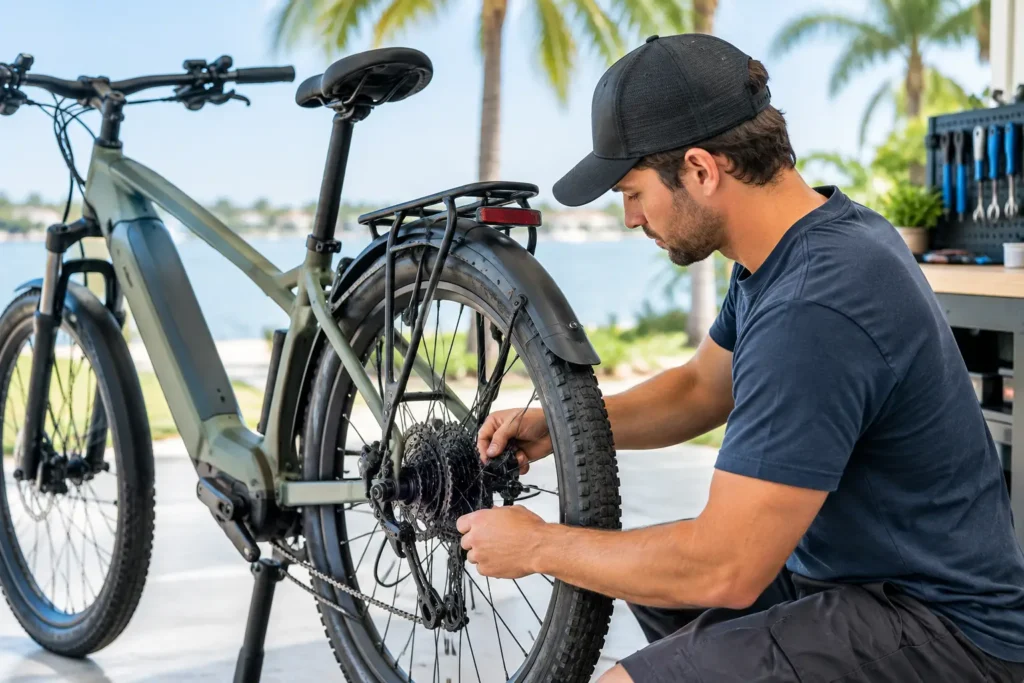
At a proper EBike service appointment, a technician should inspect brake-pad thickness and rotor condition, adjust the brakes and shifting, check wheel alignment, inspect tires, confirm major fasteners are tightened correctly, and assess drivetrain wear. For full-suspension bikes, they should also inspect pivot hardware and suspension performance. On an electric trike, wheel alignment and brake balance are particularly important for stable handling.
The electrical side matters just as much. A technician can inspect cable routing and connectors for damage or corrosion, make sure the battery mount is secure, and look for software or diagnostic concerns when supported by the bike system. Do not attempt to open a battery pack or repair damaged battery wiring at home. Batteries are high-energy components, and service should be handled with the right training and equipment. If wiring is damaged, it is highly recommended to replace the component that is associated with the damaged wiring. Splicing wires is never recommended.
A professional appointment is also a great time to address fit. If your wrists hurt, your saddle feels wrong, your back aches, or you feel unsteady starting and stopping, a small adjustment can change the entire ride. Comfort seats, suspension seatposts, ergonomic grips, and a correctly positioned handlebar can make longer rides much more enjoyable.
Florida Conditions That Call for More Attention
Salt air is one of the biggest reasons coastal riders should clean their EBike more often. After riding at or near the beach or in salty air, wipe down the frame, wheels, chain, and exposed hardware with a lightly damp cloth, then dry the bike. Avoid spraying the motor area, display, battery compartment, or bearings directly with a hose using high pressure. A high-pressure washer can force water past seals where it does not belong. If the bike is dirty enough that a hose is need, just lightly rinse and then wipe down. Always dry thoroughly. Always use rags, towels or brushes to clean as much as possible.
After a rain ride, dry the bike and lubricate the chain once it is clean. Rain itself is not always a problem for an EBike designed for normal road conditions, but storing a wet bike in a humid garage can encourage corrosion. If you ride on packed sand, inspect the drivetrain and brake area before the next outing. Fine grit behaves like sandpaper on chains, cassettes, and brake pads. If you ride often in sandy conditions, a dry lubricant may be more appropriate.
Heat changes the battery-care conversation, too. Never leave your battery in a hot vehicle or direct Florida sun for extended periods. Charge it in a dry, temperature-moderate location using the supplied charger. For long-term storage, keep the battery partially charged rather than completely full or empty, and check its charge level periodically. If you go 90 Days without recharging, it is best to plug it in to maintain battery life. Freezing temperatures also are not good for battery life and exposure to extended periods can reduce life. Try to bring your battery indoors during these periods.
Signs Your EBike Needs Service Now
Some issues should not wait for the calendar. Book service promptly if you notice a sudden loss of range, a battery that will not charge normally, damaged battery casing, frayed wires, repeated display errors, or unusual motor noises. Stop riding if the battery becomes very hot, swells, smells unusual, or shows signs of damage.
Mechanical warning signs include a chain that skips under power, brakes that feel soft or grab unpredictably, a tire with a bulge or deep cut, loose steering, cracked welds, or a wheel that rubs the frame or brake caliper. These are safety concerns, not just tune-up items.
New riders sometimes assume that electric assist makes maintenance less urgent because they are not pedaling as hard. In reality, the extra torque from a motor can accelerate drivetrain wear, while the additional speed and weight make reliable brakes, tires, and steering even more critical.
Make Service Part of the Fun
The easiest maintenance plan is the one you can remember: quick safety check before each ride, cleaning and chain care monthly, and a professional inspection every 6-12 months for regular riders. Mark the next appointment when you pick up the bike, especially if your rides include beach paths, daily commuting, or weekend exploring.
At GO EBIKES, riders can get practical help matching maintenance to the bike they actually own and the places they actually ride. A little attention now keeps your EBike ready for the next grocery run, waterfront cruise, campground loop, or longer adventure you have been meaning to take.