A battery label can make a big promise, but your ride from Yulee to the waterfront, through a neighborhood, or along a sandy coastal route has the final say. This EBike range guide helps you look past one advertised mileage number and choose a bike – and riding habits – that fit the places you actually want to go.
For many Northeast Florida riders, range is freedom. It is the confidence to take the longer route home, ride with friends without worrying about keeping up, explore a park trail, or make errands without reaching for the car keys. The right EBike can make all of that feel easy. The key is understanding what affects the miles you get from each charge.
What eBike Range Really Means
Range is the distance an EBike can travel on a fully charged battery. Manufacturers often give a range estimate, such as 40 to 60 miles, but that number is not a guarantee for every rider or every route. Think of it as a useful window based on favorable conditions, not a fixed number on the dashboard.
Your actual range depends on how much work the motor is doing. When you pedal steadily on flat pavement with a lower pedal-assist level, the battery can take you much farther. When you use maximum assist, lean heavily on the throttle, climb bridges, push through a headwind, or ride soft sand, the motor needs more energy and range comes down.
That is not a drawback. It is simply the trade-off that makes EBikes so adaptable. You can save battery on an easy cruise, then call on extra power when a steep driveway, a tiring afternoon, or a loaded rear basket calls for it.
EBike Range Guide: Start With Battery Watt-Hours
The most helpful battery specification for comparing range is watt-hours, shown as Wh. Watt-hours measure how much energy a battery stores. In simple terms, a larger Wh number generally means more available riding time.
You may also see volts and amp-hours listed. Those numbers matter, but watt-hours make comparisons easier because they combine them. A 48V, 15Ah battery has 720Wh of stored energy. A 48V, 20Ah battery has 960Wh, giving it a larger energy reserve for longer rides or more demanding conditions.
A higher-capacity battery can be a smart choice for riders who want to cover longer distances, use more assist, carry cargo, ride with a throttle, or avoid charging after every outing. It can also provide welcome breathing room as batteries naturally lose a little capacity over years of use.
Still, bigger is not automatically better for everyone. A commuter with a short, mostly flat trip may be perfectly happy with a moderate battery that charges easily overnight. Someone planning beach-area rides, weekend exploring, RV travel, or frequent trips on a fat-tire eBike may appreciate the extra capacity from day one.
Motor Power Changes How You Use That Energy
A more powerful motor can make starts, hills, loose terrain, and heavier loads feel much more manageable. It may also use more energy when you ask it to deliver that power. Motor wattage alone does not tell the whole range story, because riding style matters just as much.
For example, a rider on a 750W eBike using low pedal assist on a paved greenway may travel farther than a rider on a smaller motor who uses full assist and throttle all afternoon. The bike is a system: battery capacity, motor output, controller settings, tires, cargo, terrain, and your pedaling all work together.
The Conditions That Can Shorten Your Range
Florida may be flatter than many regions, but it is not range-neutral. Heat, wind, bridges, loose surfaces, and stop-and-go traffic all affect how much power your bike needs.
Wind is one of the biggest surprises for new riders. A steady coastal headwind can feel like a hill that never ends, especially at higher speeds. The motor works harder to keep your pace up, so the battery drains faster. If you ride out with a tailwind, remember that the return trip may cost more energy.
Tire choice and pressure matter, too. Fat tires offer confidence, comfort, and excellent stability on uneven paths, packed dirt, grass, and beach-adjacent terrain. Their wider contact patch also creates more rolling resistance than a narrower commuter tire, particularly when pressure is low or the surface is soft. That is a worthwhile trade for many adventure riders, but it is worth planning around.
Rider weight, passenger or cargo weight, and hills also add demand. A rear rack loaded with groceries, a front basket full of beach gear, or a pet trailer changes the equation. So does frequent acceleration from stop signs. None of these should stop you from using your eBike the way you want. They simply make a larger battery and a realistic range buffer more valuable.
Pedal Assist, Throttle, and the Range Trade-Off
Pedal assist is one of the best tools for managing range. Lower assist levels let you do more of the work while the motor smooths out the effort. This is ideal for relaxed rides, paved paths, and anyone who wants to maximize miles.
Higher assist levels are made for the moments when you want more help: crossing an intersection quickly, climbing a rise, riding into wind, keeping pace with a group, or finishing strong when your legs are tired. Use the power when it improves your ride, then ease it back when conditions are easy.
A throttle adds convenience and confidence, especially when starting from a stop or maneuvering a loaded bike. It can also use battery power quickly if it becomes your primary way of moving. Riders who enjoy throttle use do not need to avoid it – just consider it in their range expectations. Pedaling along with the throttle and choosing a moderate assist setting can stretch a charge considerably.
How to Get More Miles From Every Charge
The easiest range strategy is to ride smoothly. Start in a lower assist setting, pedal before asking for full power, and increase assistance when the route demands it. Sudden full-throttle launches and maximum assist at every opportunity feel exciting, but they consume energy faster.
Keep your tires properly inflated within the pressure range printed on the tire sidewall. Check them regularly, especially on fat-tire models. Underinflated tires can improve cushioning on certain surfaces, but they also make the motor work harder on pavement.
Charge your battery with the correct charger and store it out of extreme heat and direct sun. Northeast Florida heat is hard on people and electronics alike. If your bike will sit for a while, avoid leaving the battery completely empty. Keeping the battery clean, dry, and protected helps support long-term performance.
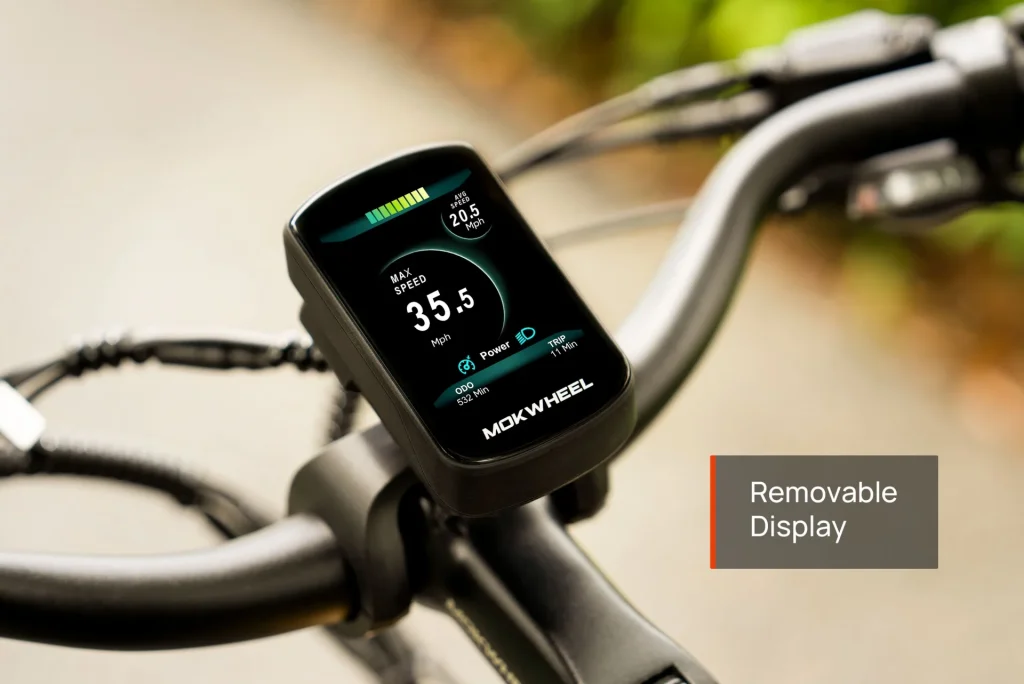
It also helps to use your display as a planning tool. Watch the battery indicator early in your ride, not only when it is low. After a few outings, you will learn how your normal routes affect charge level. That real-world experience is more valuable than chasing a single maximum-range claim. Mokwheel EBike displays also show when you are using the motor economically (ECO) or when you are using more POWER. For the best possible range, always try to stay with in ECO Mode.
Choose Range for Your Real Life, Not a Perfect Day
Before choosing an EBike, picture your longest typical day rather than your shortest errand. Add your round-trip commute, the scenic detour you are likely to take, a little extra for wind or cargo, and a comfortable reserve. If you expect to ride 25 miles regularly, a bike advertised for 25 miles under ideal conditions is probably not the relaxed choice.
A practical buffer means you are not forced to ride conservatively every time. You can use higher assist when your knee is bothering you, bring a cooler to the park, or take the family route without range anxiety. For riders who want help sorting out battery size, tire style, comfort, and motor feel, a test ride at Go EBikes makes those choices much easier to understand than a spec sheet alone.
The best range is not the highest number printed in an ad. It is enough battery for your regular ride, enough reserve for the unexpected, and enough confidence to keep choosing the bike when the day looks too good to stay parked.