A stoplight on A1A turns green, a headwind comes off the water, and you need to get moving without wobbling, straining, or holding up traffic. That is where the throttle versus pedal assist question becomes real. Both features use your eBike’s motor to make riding easier, but they deliver power in different ways – and the right choice depends on how, where, and why you ride.
For many Northeast Florida riders, the best answer is not strictly one or the other. An EBike with both pedal assist and a throttle gives you options for beachside cruising, neighborhood errands, longer rail-trail rides, and the occasional day when your knees simply want a break.
What Is Pedal Assist?
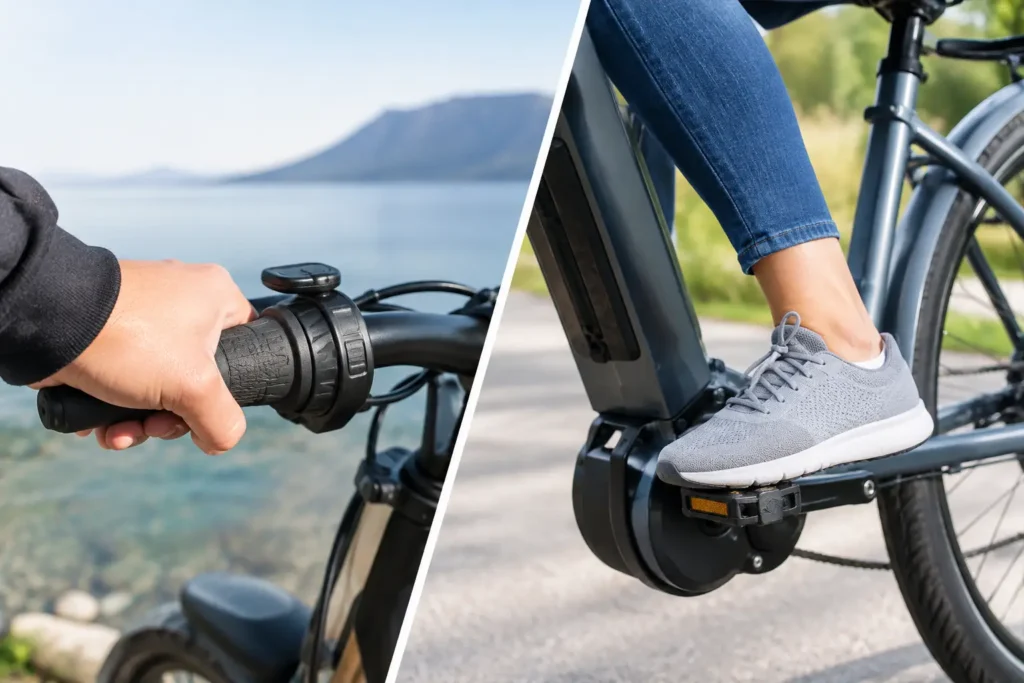
Pedal assist, often shown as PAS on an EBike display, adds motor power when you pedal. Start turning the pedals and the bike senses your effort, then helps move you forward. You are still riding a bicycle, but the motor reduces the work needed to maintain speed, cover distance, or deal with wind and inclines.
Most EBikes offer several pedal-assist levels. A lower setting gives a gentle boost and typically helps preserve battery range. A higher setting supplies stronger support when you want to keep up with traffic, tackle a bridge, or arrive at work without needing a recovery period in the parking lot.
The feeling varies by bike and motor system. Some pedal-assist systems respond to pedal movement, while others more closely measure how hard you are pushing. A mid-drive EBike often provides especially natural-feeling assistance because the motor works through the bike’s gears. The practical benefit is better control and more efficient climbing when your route includes hills, loose surfaces, or changing terrain.
Why riders like pedal assist
Pedal assist keeps you involved in the ride. It feels familiar to longtime cyclists and reassures first-time eBike owners who worry that an electric bike will feel too fast or too complicated. You choose the assistance level, shift when needed, and pedal at a pace that feels comfortable.
It is also a great fit for riders focused on longer outings. Since you are contributing some pedal power, you can often travel farther on a charge than you would by relying heavily on throttle power. For Jacksonville-area commuters, that can mean enough battery confidence for a round trip, errands after work, or a detour through the neighborhood just because the weather is too nice to go straight home.
What Is an EBike Throttle?
A throttle powers the motor without requiring you to pedal. Depending on the bike, it may be a thumb lever, twist grip, or button-style control near the handlebar. Press or turn it, and the motor moves the bike forward.
Think of the throttle as helpful reserve power at your fingertips. It can get you rolling from a full stop, help you cross an intersection with confidence, or provide a break when fatigue catches up with you late in a ride. On many EBikes, the throttle is especially useful at low speeds, when getting a loaded bike moving can take more effort than expected.
A throttle does not mean you have to ride without pedaling. Many riders pedal most of the time and use the throttle only when it solves a specific problem. That flexibility is why it is so popular with commuters, older adults, riders returning to cycling, and anyone carrying groceries, a child seat, or gear in a rear basket.
Why riders like a throttle
The biggest advantage is immediate assistance. If you stop on an incline, pull out from a side street, or need a little momentum before your balance settles in, a throttle can make the start smoother. It can also be a confidence builder for people who have not ridden in years.
For riders managing sore hips, knee discomfort, limited stamina, or recovery from an injury, a throttle offers a practical backup plan. You can still enjoy time outside and pedal when you feel good, without worrying that you will be stuck far from home if your energy changes halfway through the ride.
There is a trade-off: throttle use generally consumes more battery than light pedal assist. If maximum range is your priority, treat the throttle as a tool rather than the default way to ride. Battery capacity, rider weight, terrain, tire pressure, cargo, wind, and assist level all affect how far you can travel.
Throttle Versus Pedal Assist for Everyday Riding
The choice becomes easier when you picture your normal route. Pedal assist is usually the better everyday setting for a rider who wants exercise, longer range, and a bicycle-like experience. It is ideal for cruising through Amelia Island neighborhoods, commuting across town, or enjoying a weekend ride where you want the motor to flatten out the hard parts without taking over.
A throttle shines in short, demanding moments. Use it to launch from an intersection, move a heavy fat-tire bike out of a sandy parking area, or get home when the Florida heat has taken more out of you than planned. It can also make an EBike feel more approachable for a partner or family member who is nervous about starting and stopping.
For many people, a combination is the sweet spot: pedal assist for most of the ride, throttle for starts and occasional relief. That approach keeps the ride active, stretches battery range, and gives you dependable power when conditions change.
Your Bike Style Matters Too
The control system is only one piece of the decision. The eBike’s frame, tires, motor, and accessories will shape your experience just as much.
A step-through commuter bike makes mounting and dismounting easier, especially when you are wearing work clothes or dealing with limited mobility. Pair that with a throttle, and stop-and-go errands can feel far less intimidating. A comfort seat, suspension seat post, and mirror can make those rides even more relaxed.
Fat-tire eBikes are popular for coastal paths, packed dirt, grass, and uneven pavement. Their wider tires add stability, but they can take extra effort to get rolling. A throttle is useful here, while pedal assist helps maintain momentum over longer distances.
Full-suspension and mid-drive models are built for riders who want more capability on rougher routes or varied terrain. These riders often appreciate responsive pedal assist because it works naturally with gearing and gives precise support through changing conditions. A throttle remains valuable as a quick boost, but the pedal-assist system may become the star of the ride.
Electric trikes deserve their own mention. Their stable three-wheel design appeals to riders seeking extra balance and cargo capacity. A throttle can be very helpful for getting underway, while measured pedal assist helps keep the ride controlled and comfortable. Because trikes handle differently from two-wheel bikes, a test ride is especially worthwhile.
How to Ride Each Feature Safely
Whether you prefer a throttle, pedal assist, or both, begin in a lower assist setting. Take a few minutes in an open parking lot to practice starting, braking, turning, and using the controls. Learn how quickly your specific bike responds before riding near traffic, pedestrians, or busy paths.
Keep your fingers near the brake levers when using the throttle, particularly at low speed. Ease into the control instead of pressing it abruptly. When using high pedal assist, remember that the bike may accelerate faster than a traditional bicycle as soon as you start pedaling.
A properly fitted helmet, bright lights, and a mirror are simple upgrades that make a major difference. If you plan to carry cargo, secure it in a basket or rack rather than hanging bags from the handlebar. That keeps steering predictable and helps you stay in control when the motor is assisting.
The Best Way to Choose
Specifications can tell you whether a bike has a throttle and how many pedal-assist levels it offers. They cannot tell you how the controls will feel in your hands, whether the frame fits your body, or how confident you will feel at your first stoplight.
That is why a test ride matters. At GO EBIKES, you can compare the response of different bike styles, practice using both controls, and ask practical questions about range, comfort, storage, accessories, and local riding. A professionally assembled bike also means the fit and setup are checked before you head out. The EBikes at GO EBIKES are Class 2, which means they have pedal assist and a throttle so you do not have to choose. These EBikes offer the best of both worlds.
Choose the feature that helps you ride more often, not the one that sounds most impressive on a spec sheet. If pedal assist gets you out for longer, healthier rides, it is doing its job. If a throttle gives you the confidence to take that first trip to the store or join friends on the trail, that is a win too. The right eEike should make your next ride feel possible – and make you want to take one more block before heading home.