Soft beach sand can make an ordinary bike feel like it has a flat tire within seconds. A fat tire ebike for sand changes that experience by adding traction, flotation, and electric assist where your legs would otherwise be working overtime. For riders around Jacksonville, Yulee, Amelia Island, and Northeast Florida’s coastal backroads, the right setup can turn a frustrating slog into a fun, confidence-building ride.
The key is knowing that not every fat-tire eBike performs the same way on sand. Tire width matters, but so do tire pressure, motor response, rider position, bike weight, and the kind of sand you plan to ride. Packed sand near the waterline is a very different surface from loose, dry sand near the dunes.
What a Fat Tire eBike for Sand Needs
A true sand-capable eBike starts with wide tires. Most fat-tire models use 4-inch-wide tires, which create a larger contact patch than standard bicycle tires. That extra surface area helps the bike stay closer to the top of the sand instead of cutting down into it.
Tire pressure is just as important as tire size. On pavement, higher pressure rolls efficiently and feels quick. In soft sand, lowering the pressure lets the tire spread out and float better. Many riders find that a moderate reduction in pressure creates a noticeable improvement in control and traction, but going too low can make the bike feel vague, increase rolling resistance, or raise the risk of damaging a rim on a hard obstacle.
Start conservatively and adjust based on the surface, rider weight, and tire manufacturer guidance. If the bike feels like it is digging in, a small pressure reduction may help. If it feels unstable or squirrely, add a little air back. Carrying a compact tire pump is a smart habit when your route includes both sand and pavement.
Motor power also matters, especially when the sand turns loose. A responsive pedal-assist system helps you maintain the steady forward momentum that sand requires. Throttle capability can be useful when starting from a stop, climbing through a soft patch, or getting moving again after a quick photo break. The goal is controlled power, not a sudden burst that spins the rear tire.
Packed Sand vs. Loose Sand
The best beach rides usually happen on firm, packed sand. When local regulations and beach conditions allow riding, this surface gives a fat-tire eBike the most natural feel. You can keep a comfortable cruising pace, use lower levels of pedal assist, and preserve more battery for the ride home.
Loose, dry sand is another story. It is more demanding for every bike, including wide-tire electric models. You may need higher assist, a smoother pedal cadence, and a more relaxed grip on the bars. Expect battery range to drop faster because the motor is working harder and the tires have more resistance to overcome.
If you hit a deep patch, avoid sharply turning the front wheel or mashing the pedals. Keep your weight balanced, look ahead, and maintain steady momentum. A gradual line is usually better than an abrupt correction. If the bike bogs down, there is no shame in stepping off and walking it through the worst section. Even experienced sand riders do it.
Choose Power You Can Control
More motor power can make sand riding easier, but only if the delivery feels predictable. On soft terrain, sudden acceleration can break traction and send the rear wheel spinning. Look for an eBike with easy-to-use assist controls so you can increase support when the surface gets difficult and dial it back when you return to firm ground.
A quality drivetrain is helpful, too. Pedal assist does not replace shifting. Using an easier gear lets you keep a smooth cadence rather than forcing the motor and your legs to fight the sand. This is especially useful on beach approaches, loose trails, and sandy campground roads.
Comfort Is Part of Performance
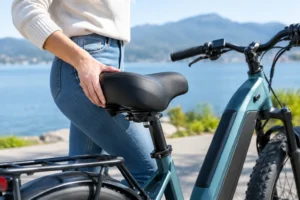
Sand riding asks more from your body than smooth pavement. Wider tires naturally absorb some vibration, but a suspension fork, suspension seatpost, or comfort saddle can make a long coastal ride much more enjoyable. These features are not just about luxury. When you are comfortable, you are less likely to tense up, overcorrect, or cut a ride short.
For many riders, a step-through frame is worth considering. It makes getting on and off the bike easier when you stop frequently, carry a beach bag, or need to put a foot down quickly in uneven terrain. Taller riders and those looking for a more traditional athletic stance may prefer a high-step frame instead. The best choice depends on fit, confidence, and how you plan to ride.
The Trade-Offs of a Sand eBike
A fat-tire eBike brings real benefits on sand, grass, shell paths, and uneven coastal terrain. It also comes with trade-offs. Wide tires and heavier frames generally require more effort to pedal without assist, take up more storage space, and can feel less nimble than a lighter commuter eBike on city streets.
Battery range is another variable. A listed range is usually based on favorable conditions, not deep beach sand, strong headwinds, soft trails, heavy cargo, and maximum assist all at once. If your ride includes loose sand, plan for a shorter range and avoid starting with a low battery. A removable battery is especially convenient for riders who store their eBike in a garage, RV, or apartment and prefer to charge indoors.
Weight matters when transporting the bike. A capable fat-tire eBike can be substantial, especially with accessories attached. If you want to bring it to a state park, campground, or beach access point, make sure your vehicle rack is rated for the bike’s weight. Removing the battery before loading can make handling easier and reduce strain on the rack. Removing the battery while transporting your eBike on a rack is also an excellent theft deterrent. No battery, no interest. Batteries are expensive for thieves to replace.
Accessories That Make Beach Rides Easier
The right accessories turn a great bike into a practical day-out setup. A rear rack or basket gives you a place for water, sunscreen, a light jacket, and a small lock without loading down your back. A phone mount can help with navigation, though it should be secure enough for bumpy paths.
For sand and coastal conditions, prioritize these essentials:
- A properly fitted helmet for every ride
- Front and rear lights for visibility near dusk or in shaded trail areas
- A mirror to help monitor cyclists, pedestrians, and vehicles
- A portable pump and basic flat-repair kit
- A weather-resistant bike cover if the eBike will travel on a rack
A hitch rack designed for electric bikes is often a better choice than a lightweight rack made for standard bicycles. Fat-tire eBikes need adequate tire trays, secure frame support, and a weight rating that matches the bike. At GO EBIKES, when you purchase two Mokwheel EBikes you get a Free Hitch Rack to transoport them. That’s a $499 Value.
Saltwater Care Is Not Optional
Salt air, salt spray, and wet sand can be tough on metal components. You do not have to avoid coastal riding, but you do need a simple post-ride routine. After riding near saltwater, wipe down the frame, fork, wheels, and drivetrain with a lightly damp cloth. Keep water away from charging ports and electrical connections, and never use a high-pressure spray on the bike.
Once the bike is dry, inspect the chain and moving parts. A bike-specific lubricant helps protect the drivetrain, while regular cleaning keeps sand from grinding into the chain, cassette, brake components, and bearings. If you ride at the coast frequently, schedule periodic service rather than waiting for shifting or braking problems to appear.
Check local beach rules before you ride. Access policies can vary by municipality, season, wildlife protection area, time of day, and whether an eBike is treated differently from a conventional bicycle. Respecting posted restrictions protects both the beach environment and access for future riders.
Test Ride Before You Commit
Sand capability is not only a specification on a tag. It is how stable the bike feels when you start, how naturally the controls respond, whether the saddle supports you, and whether you can comfortably handle the bike at low speed. A test ride gives you a much better answer than comparing photos online.
At GO EBIKES in Yulee, riders can see different frame styles in person, compare fat-tire options, and test ride before making a decision. Free assembly means the bike is set up correctly from the start, and local guidance can help you match the bike, accessories, and fit to the way you actually plan to ride.
A sandy route should feel like an invitation to explore, not a reason to leave your bike behind. Choose wide tires, controllable assist, practical comfort features, and a care routine that respects Florida’s coastal conditions. Then pick a quiet stretch of firm sand, keep your momentum smooth, and enjoy where the ride can take you.