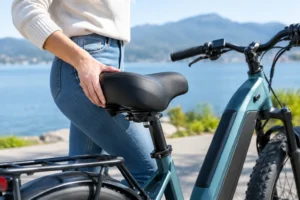
A mid drive vs hub motor decision is not about choosing the “best” eBike motor in the abstract. It is about choosing the motor that feels right on your usual route – whether that means cruising Amelia Island paths, handling neighborhood errands, riding Jacksonville streets, or exploring unpaved trails with a loaded rear rack.
Both systems can make riding more comfortable, more practical, and a lot more fun. The difference is where the motor delivers its power and how that changes the bike’s handling, climbing ability, shifting habits, and price. A test ride is the fastest way to feel it, but knowing what to expect will help you narrow the field before you step on the pedals.
Mid Drive vs Hub Motor: The Basic Difference
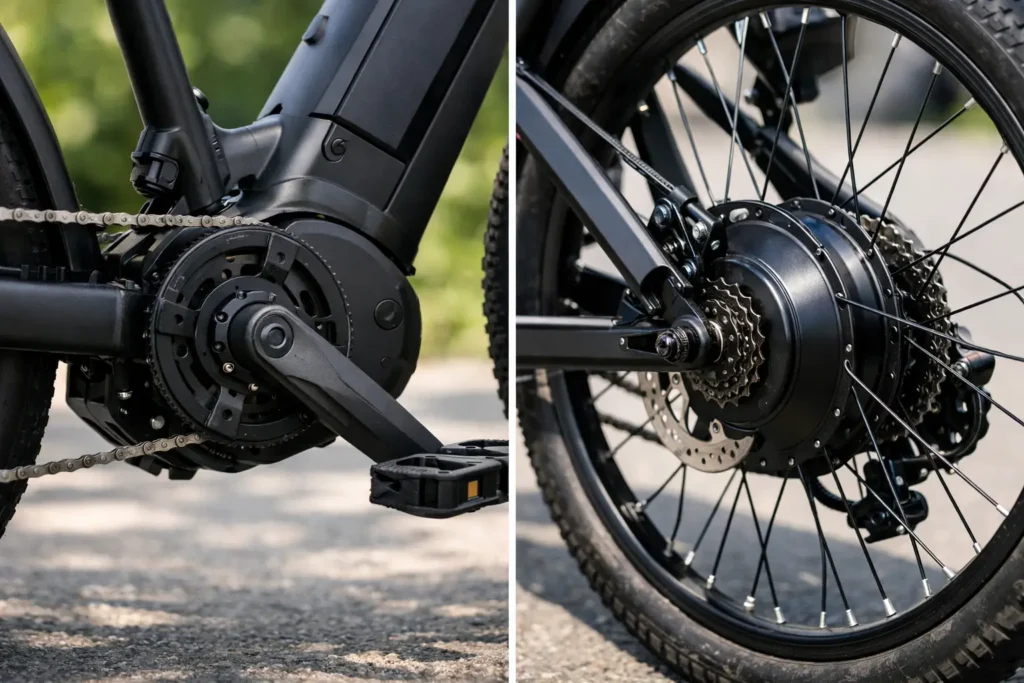
A hub motor sits inside the center of either the front or rear wheel, and in some situations both. Most quality commuter, folding, and fat-tire eBikes use rear hub motors. When you apply pedal assist or use the throttle, the motor turns the wheel directly. It is a straightforward design that delivers smooth, dependable power with very little learning curve.
A mid-drive motor sits at the bike’s bottom bracket, right between the pedals. Instead of turning the wheel on its own, it adds power through the chain and gears. That placement keeps the motor weight low and centered, and it lets the motor take advantage of the bike’s drivetrain just as your legs do.
Think of a hub motor as a helpful push from the rear of the bike. A mid-drive feels more like your pedaling suddenly became much stronger. Both can get you where you are going. They simply get there in different ways.
Why Hub Motors Work So Well for Everyday Riders
For many Northeast Florida riders, a rear hub motor is the practical, comfortable choice. Our local terrain is generally flat to gently rolling, so most riders do not need the climbing advantage a mid-drive provides. What they often want is easy acceleration from a stop, relaxed cruising, and enough power to manage wind, bridges, packed sand, or a heavier load.
Hub motors are especially appealing to first-time EBike owners because they are easy to operate. Select your assistance level, begin pedaling, and the motor helps move the bike forward. On models equipped with a throttle, you can get moving without pedaling right away – useful when restarting at an intersection, pulling away with a basket full of groceries, or giving your knees a short break.
They also tend to offer strong value. Because the motor system is mechanically simpler, hub-motor EBikes can often provide larger batteries, fat tires, suspension, racks, lighting, and comfort features at a more approachable price. That makes them a natural match for commuting, recreational paths, campground riding, and everyday transportation. The majority of EBikes offered at GO EBIKES are in fact rear hub-motors.
Hub Motor Strengths
A hub-motor eBike is usually an excellent fit if you want a calm, low-maintenance ride with confident power on mostly flat terrain. It is also a smart option for riders who prefer using a throttle, want an easy way to get up to speed, or simply do not want to think much about gear selection.
Rear hub motors work particularly well on fat-tire eBikes. The combination of broad tires and motor assistance brings stability and traction to loose surfaces, grass, gravel, and uneven paths. For coastal riders, that extra confidence can make the difference between leaving the bike at home and taking the long way just because you can. The Mokwheel Basalt ST 2.0 (https://goebikesfl.com/product/basalt-st-2-0/) is the most popular seller at GO EBIKES and is a fat-tire, rear hub-motor EBike.
Hub Motor Trade-Offs
Because the motor powers the wheel directly, it does not benefit from the bike’s gears in the same way a mid-drive does. It can still tackle moderate hills, but very steep, sustained climbs ask more of the motor and battery.
The weight also sits at the wheel rather than the center of the frame. On a quality EBike, this is not a problem for normal riding, but a mid-drive generally feels more balanced when you are maneuvering through technical terrain or lifting the front wheel over an obstacle.
Why Mid-Drive Motors Shine on Hills and Trails
A mid-drive system earns its reputation when the route gets demanding. Since it uses the bike’s gears, you can shift into a lower gear before a steep hill and allow the motor to spin efficiently. The result is strong, controlled climbing power without needing an oversized motor at the wheel.
That makes a mid-drive a favorite among riders who live near frequent hills, enjoy longer rides with elevation changes, tow cargo, or want to explore more challenging trail systems. It is also a great choice for experienced cyclists who enjoy shifting and want the eBike to respond naturally to their pedal pressure and cadence.
The centered motor placement changes the bike’s feel, too. Mid-drive EBikes often feel planted and well balanced through turns because the heaviest component is low in the frame rather than at the rear wheel. On a full-suspension EBike or a trail-focused fat-tire model, that balance can be a real advantage. The Mokwheel Onyx ST (https://goebikesfl.com/product/onyx-st-ebike/) is a fat tire, mid-drive EBike that is available at GO EBIKES.
A More Natural Pedaling Feel
Many mid-drive systems use torque sensors, which measure how firmly you are pressing on the pedals. Press lightly and receive gentle assistance. Push harder into a hill or headwind and the motor responds with more support. It feels intuitive, almost like having stronger legs on demand.
This responsive feel is a major reason performance-minded riders gravitate toward mid-drives. You are still choosing the gears and contributing to the ride, but the motor takes the edge off the hard parts. For riders returning to cycling after time away, that can make longer and more ambitious routes feel realistic again.
Mid-Drive Trade-Offs
A mid-drive is not automatically the right answer for every rider. These systems typically cost more, and their added power flows through the chain, cassette, and drivetrain. That means good shifting habits matter. Ease up on pedal pressure while shifting, keep the chain properly lubricated, and schedule routine service to protect the components.
Most mid-drive EBikes also focus on pedal assist rather than throttle-only riding. That is ideal for riders who want a bicycle-like experience, but less appealing if a throttle is a must-have feature for your comfort or mobility needs.
Battery Range Is About More Than Motor Type
It is easy to assume a hub motor always uses more battery power or that a mid-drive always goes farther. Real-world range is more complicated. Battery size, rider weight, tire pressure, wind, terrain, cargo, assist level, and how much you pedal all matter.
A mid-drive can be very efficient on hilly routes because you can select the right gear and keep the motor working in its efficient range. On flat roads, though, a well-matched hub motor and large battery can deliver excellent range for errands, beach cruising, and daily commuting.
For Northeast Florida, wind can have as much impact as a hill. A strong coastal headwind, soft trail surface, or fully loaded cargo rack will draw more power from either system. If you plan longer adventures, choose battery capacity based on your expected ride length and leave a comfortable reserve rather than shopping by motor style alone.
Which Motor Fits Your Riding Style?
Choose a hub motor if your priority is relaxed transportation, simple controls, throttle capability, and strong value. It is a dependable choice for neighborhood rides, commuting, paved paths, RV travel, casual trail use, and getting around without arriving sweaty or worn out. Riders considering a step-through eBike or electric trike often appreciate the immediate, easygoing support a hub motor provides.
Choose a mid-drive if you regularly face steep grades, want to ride technical or hilly terrain, enjoy using gears, or value a balanced and responsive bike feel. It is also worth considering if you want to carry heavier cargo over varied terrain or you see yourself progressing from casual paths to more ambitious rides.
There is plenty of overlap. A recreational rider can love a mid-drive, and a serious commuter may be perfectly happy with a hub motor. The better question is not, “Which motor is more powerful?” Ask, “What will make me want to ride more often?”
Test Ride for the Details a Spec Sheet Cannot Show
Motor wattage, battery voltage, and sensor type matter, but comfort matters just as much. During a test ride, pay attention to how easily you can start and stop, whether the frame fits your body, how the seat feels, and whether you are comfortable reaching the controls. Try the assist levels, shift through the gears, and imagine carrying the accessories you actually plan to use.
At GO EBIKES, a local test ride gives you the chance to compare those details before making a decision. Free assembly and guidance on fit, helmets, mirrors, racks, and comfort upgrades can turn a good EBike into one you will rely on for years.
Your ideal motor is the one that makes the route ahead feel inviting. Bring in the ride you have in mind, take a few models around the block, and let the bike’s feel make the choice clearer.