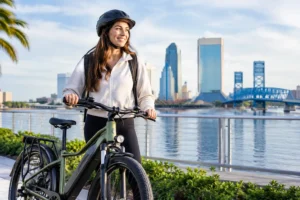
A helmet is easy to leave behind when you are heading out for a quick ride to the waterfront, a neighborhood errand, or a cruise through the Jacksonville area. But people regularly ask, “are ebike helmets required Florida?” The short answer is that Florida’s statewide rule is based mainly on the rider’s age: riders and passengers under 16 must wear a properly fitted bicycle helmet. Riders 16 and older are generally not required by state law to wear one, but that does not make it a throwaway decision.
An EBike can make everyday riding feel remarkably easy. It can also help you reach speeds and cover distances that feel different from a casual pedal-bike ride. A helmet is a practical piece of riding equipment – especially around traffic, shared paths, uneven pavement, sand, rain, and distracted drivers.
Are eBike Helmets Required in Florida for Adults?
For a standard electric bicycle that meets Florida’s eBike definition, Florida law generally treats it much like a bicycle for helmet purposes. That means riders age 16 and older are not subject to a statewide helmet mandate. The same general rule applies whether you are riding a commuter eBike, a step-through model, a fat-tire bike, or an electric trike.
Florida requires a bicycle helmet for anyone under 16 who rides as an operator or a passenger on a bicycle or EBike. The helmet must meet the applicable federal safety standard and fit correctly. A loose helmet, one sitting too far back on the head, or an unbuckled strap will not provide the protection it is meant to provide.
Why Adults Should Still Wear One
Legal and wise are not always the same thing. Northeast Florida offers great EBike riding, from flat neighborhood streets and coastal routes to longer recreational trips, but local conditions can change quickly. Afternoon showers can make pavement slick. Wind can move a bike sideways near open roads. Loose sand, tree debris, railroad crossings, driveway entrances, and potholes can catch a wheel when you least expect it.
Electric assist also changes the pace of a ride. You may be moving quickly after a stoplight, carrying groceries in a rear basket, riding with a friend, or using your eBike to replace short car trips. Even riders who use modest pedal assist can build speed without the effort that normally signals, “I’m going fast.” A quality helmet provides a margin of protection without taking away the relaxed freedom that makes eBikes so enjoyable.
For many adults, comfort is the reason a helmet ends up staying home. The fix is not to skip it. The fix is to find one that fits. Modern bicycle helmets can be lightweight, ventilated, adjustable, and much more pleasant for warm Florida rides than older designs. A good fit should feel secure and level, not tight or distracting.
The Florida EBike Classification Matters
Not every two-wheeled electric vehicle is legally an EBike. Florida recognizes three EBike classes, and each has rules that affect where and how it can be ridden.
A Class 1 EBike provides pedal-assist power only and stops assisting at 20 mph. A Class 2 EBike can use a throttle to propel the bike and also stops providing power at 20 mph. A Class 3 EBike is pedal-assist only, can assist up to 28 mph, and includes a speedometer.
For riders 16 and older, Florida’s statewide helmet requirement still generally does not change by EBike class. But a Class 3 EBike’s higher assisted speed is a strong practical reason to wear one. At 25 to 28 mph, a minor road hazard can become a serious fall much faster than it would on a slow neighborhood bicycle. Many EBike manufacturers provide the option to increase or decrease top speeds by going into menu options on their displays.
There is another reason classification matters: an electric bike that exceeds the state’s EBike limits or is modified to perform beyond them may be treated differently under Florida law. That can bring different equipment, licensing, registration, insurance, and helmet considerations. If you are buying an EBike for bike paths, neighborhood use, commuting, or recreation, choose a properly classified model and avoid assuming every throttle-powered vehicle follows bicycle rules.
Local Rules Can Add Another Layer
Florida’s statewide helmet law is the starting point, not the only thing to consider. Cities, counties, parks, trail managers, and private properties may set rules about where EBikes can operate, what class is allowed, and how riders must behave around pedestrians. Those rules are more likely to affect access and speed than adult helmet use, but it is still smart to check before trying a new trail or public space.
Ride behavior matters just as much. On shared-use paths, slow down around walkers, announce your pass clearly, and give people room. On streets, follow traffic signals and ride predictably. Florida law gives bicyclists many of the same rights and duties as motorists, and an EBike rider should be especially visible and intentional when navigating busy Jacksonville-area roads.
Night riding deserves extra attention. Florida requires bicycles operated between sunset and sunrise to have a white front lamp visible from at least 500 feet and a red rear lamp and reflector visible from at least 600 feet. A helmet does not replace lights, reflective details, or careful route planning. It complements them.
Choosing a Helmet You Will Actually Wear
Start with a bicycle helmet that carries a current CPSC certification label. That is the baseline for a helmet sold for bicycle use in the United States. Do not substitute a hard hat, a skate-style helmet without the appropriate certification, or a helmet that has been through a significant crash.
Fit is more valuable than flashy features. Place the helmet level on your head, with the front edge about one or two finger widths above your eyebrows. Adjust the rear retention dial so it stays put when you shake your head. The side straps should form a “V” just below each ear, and the chin strap should be snug enough that only one or two fingers fit underneath.
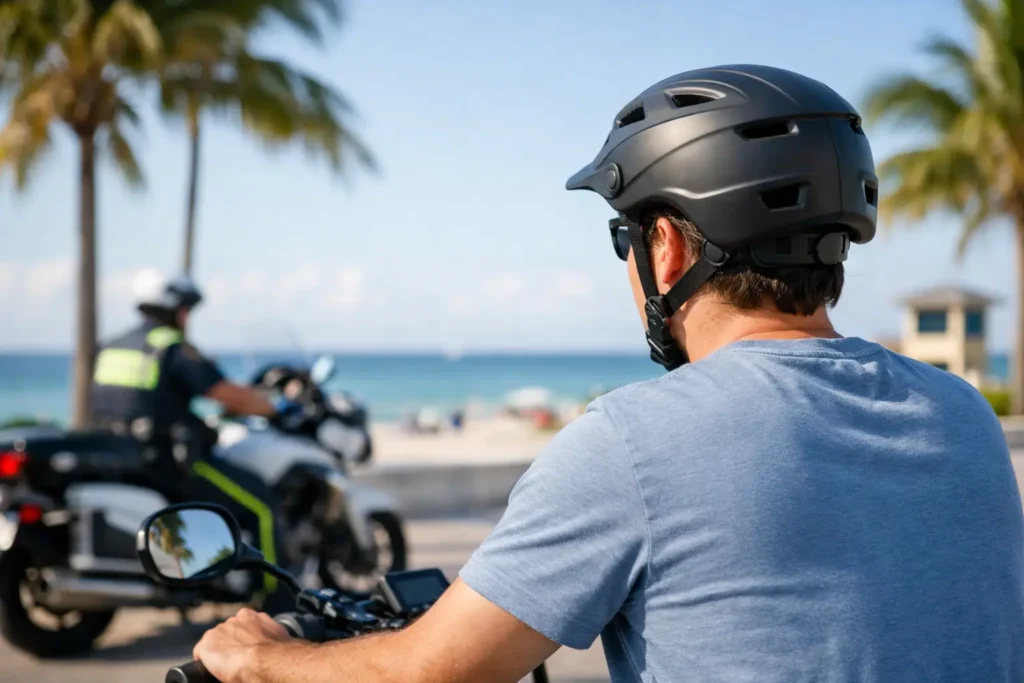
For Florida heat, look for generous ventilation and a comfortable moisture-wicking pad system. Commuters may appreciate a rear light mount or reflective elements. Riders who spend time on roads at higher speeds may prefer added coverage at the back of the head. If you wear glasses, bring them when trying helmets on. The right model should work with your everyday riding setup, not fight it.
Replace a helmet after any crash in which it takes an impact, even if the outside looks fine. Replace it as well when the shell, foam, straps, or buckle show damage, or when it no longer fits correctly. Heat, age, sweat, and regular use all take their toll over time.
Traditional bike helmets are only rated for speeds up to 15 mph. With most Ebikes exceeding these speeds it is a good idea to look for a helmet that is higher rated. GO EBIKES offers helmets from xnito https://xnito.com/ and LUMOS https://www.lumoshelmet.co/ that are NTA-8776 rated. This means they are rated to handle speeds up to 28 mph. They also have front and rear lighting for better visibility at night. The LUMOS Ultra EBike helmet even has turn signals.
A helmet is essential protective gear, but it works best as part of a complete setup. Before a longer ride, make sure your tires have proper pressure, brakes feel firm, lights are charged, and cargo is secured. A mirror can help commuters monitor traffic without constantly turning their head. Gloves can improve grip in hot, wet weather, while eye protection keeps bugs, dust, and wind out of your line of sight.
The bike itself should fit the rider. A step-through frame can make starts and stops easier for riders with limited mobility or anyone carrying gear. Suspension can take the sting out of rough pavement and trail surfaces. Proper saddle height and handlebar position reduce fatigue, which helps riders stay alert later in the ride.
That is why a test ride is valuable. At GO EBIKES , riders can compare fit, handling, braking feel, control placement, and accessory options in person before making a decision. It is easier to build a safe, comfortable EBike setup when you can see how the bike feels at a stop, through a turn, and under pedal assist.
The Practical Answer for Florida Riders
If you are 16 or older, Florida generally does not legally require you to wear a helmet on a properly classified EBike. If you are under 16, the answer is yes. For every adult rider, the better question is not whether you can ride without one. It is whether a few extra seconds before leaving home are worth the confidence to enjoy every mile more fully.