A battery that once carried you from Yulee to a favorite trail or around Jacksonville with power to spare may eventually show less range. That is normal. Understanding why ebike batteries degrade helps you protect one of your bike’s most valuable components and keep every ride feeling dependable.
Most modern eBikes use lithium-ion battery packs. They are light, powerful, and built to deliver years of enjoyable riding, but they are not permanent. Every battery ages with time, use, temperature, and charging habits. The goal is not to stop aging completely. It is to avoid the conditions that make it happen faster.
Why eBike Batteries Degrade
Inside a lithium-ion battery are cells that store and release energy through a chemical reaction. Each time you charge and discharge the pack, that reaction creates a tiny amount of wear. Over hundreds of charge cycles, the cells gradually hold less energy than they did when new.
A charge cycle does not necessarily mean plugging in once. Using 50% of your battery on one ride and 50% on the next generally adds up to one full cycle. That is good news for riders who make shorter trips, commute a few days a week, or use pedal assist strategically rather than draining the battery on every outing.
Time matters, too. Even an eBike that spends long stretches parked in the garage will experience some calendar aging. Battery chemistry changes slowly whether you ride or not. A quality battery management system helps protect the pack from unsafe charging, overheating, and over-discharging, but it cannot erase the natural effects of age.
The practical result is usually gradual. You may notice that the same route requires a little more battery than it did last season, especially if you ride at higher assist levels or carry cargo. A slow reduction in range is expected. A sudden, major change is a reason to have the bike checked.
Heat is especially tough on batteries
Northeast Florida gives riders plenty of sunny days, but high heat is one of the biggest reasons battery capacity declines faster. Heat speeds up the chemical reactions inside lithium-ion cells, including the ones that cause wear. Extreme cold can also reduce battery life. If temperatures are below freezing, try to bring your battery indoors if possible.
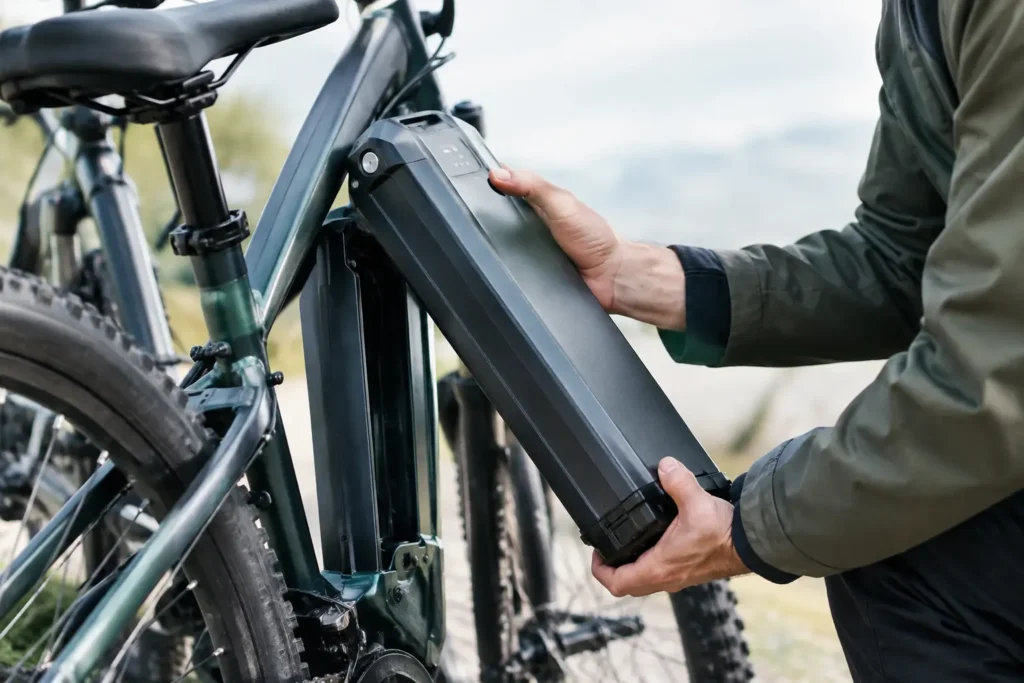
Leaving an eBike or removable battery in a hot vehicle is particularly hard on it. A car, SUV, or RV storage compartment can get far hotter than the outdoor temperature in a short time. Direct sunlight can also heat a dark battery case quickly when the bike is parked at the beach, on a trailhead rack, or outside a restaurant.
Ride in warm weather without worry, but treat post-ride charging differently. If the battery feels warm after a long ride, let it cool indoors before connecting the charger. Charging a hot pack adds stress that a few minutes of patience can avoid.
Very high and very low charge levels add stress
Lithium-ion batteries are happiest somewhere in the middle of their charge range. Keeping a battery at 100% for days or weeks, especially in a warm garage, can accelerate aging. Letting it sit completely empty can be just as problematic, because the voltage may fall low enough that the battery protection system will not allow normal charging.
For regular riding, charging to full is completely reasonable when you need the range. A long coastal ride, a commute with limited charging access, or an all-day adventure is exactly what full capacity is for. The better habit is simply not leaving the bike fully charged for extended periods when you do not plan to ride.
If you are storing an eBike for more than a few weeks, aim for roughly 40% to 70% charge. Check it monthly or every couple of months, depending on the battery and storage conditions, and recharge if the level is dropping too low. Store the pack in a dry, climate-controlled area rather than an unconditioned shed or a hot garage.
Charging Habits That Help an eBike Battery Last
Good battery care is less complicated than it sounds. Use the charger designed for your specific eBike battery, plug it into a reliable outlet, and charge in a dry area with airflow. Avoid generic chargers or modified equipment, even if the connector seems to fit. Voltage, current, and communication requirements vary between systems.
You do not need to run the battery down before charging. In fact, shallow charges are fine for lithium-ion packs. If you used 25% or 40% on a ride, it is okay to recharge before your next trip. What matters more is avoiding repeated deep discharges and avoiding long-term storage at either extreme.
It is also wise to unplug the charger once charging is complete unless your bike manufacturer’s instructions specifically say otherwise. Modern chargers and battery systems include protections, but unplugging is a simple way to reduce unnecessary time at full charge and gives you a chance to inspect the equipment.
Before charging, take a quick look at the battery case, terminals, charger cord, and charging port. Keep contacts clean and dry. If your removable battery has been exposed to rain, wipe it down and allow the port area to dry before connecting a charger. Florida humidity alone does not ruin a sealed battery, but moisture at electrical connections can cause trouble over time.
Your Riding Style Can Change Battery Wear
Hard acceleration, maximum assist, steep terrain, loose sand, and heavy loads ask more from an eBike battery. That does not mean you should avoid the fun stuff. Fat-tire rides, full-suspension adventures, and hauling a loaded basket are part of what makes eBiking so useful. It simply means the battery works harder under those conditions and may run warmer.
A few small choices can reduce the strain without making your ride less enjoyable. Shift into an easier gear before a hill, add some pedal effort when starting from a stop, and use the assist level that fits the moment instead of leaving it on maximum all day. Proper tire pressure also matters. Soft tires create more rolling resistance, reducing range and making the motor pull harder.
Rider weight, wind, road surface, cargo, and throttle use all affect range. So does the bike itself. A heavier fat-tire eBike moving through beachside wind will use energy differently than a lightweight commuter bike on smooth pavement. That is why advertised range should be treated as a useful estimate, not a guarantee for every route.
When Reduced Range Is Not Just Battery Aging
Not every range issue comes from the battery. A dragging brake, underinflated tires, a dirty drivetrain, or a display setting can make an eBike seem less efficient. Cold weather also temporarily reduces available battery performance. Unlike heat-related aging, that winter range drop often improves when temperatures rise.
Pay attention if you see a sudden drop in range, an error message, inconsistent power, unusual heat, a damaged case, loose terminals, or a battery that will not charge normally. Stop using a battery that is swollen, cracked, leaking, smells unusual, or becomes excessively hot. Do not attempt to open or repair a lithium-ion pack at home.
Local support makes a difference here. A professional eBike inspection can identify whether the issue is normal capacity loss, a charger concern, a connection problem, or something mechanical that is making the bike work harder than it should. At GO EBIKES, riders can get practical help with battery care, fit, accessories, and the everyday details that make ownership easier.
A Simple Routine for Longer-Lasting Rides
The best routine is straightforward: bring the battery inside after riding when practical, keep it away from intense heat, use the correct charger, and avoid storing it completely full or empty for long periods. Keep your tires inflated, your drivetrain maintained, and your bike covered or sheltered when it is parked.
Your eBike battery is meant to be used, not worried over. Ride the routes that make you smile, charge thoughtfully, and give the pack a cool, dry place to rest between adventures. Those habits can help you enjoy more confident miles for years to come.