A packed-sand trail can feel easy for the first mile, then turn loose, washboard rough, or unexpectedly soft after a Florida rain. That is why the best ebikes for gravel paths are not simply the fastest or the most powerful models. They are the bikes that give you steady traction, comfortable control, enough battery for the ride home, and a fit that keeps you relaxed when the path gets uneven.
For riders around Jacksonville, Yulee, and Northeast Florida, gravel riding often means more than mountain roads. It can include crushed-shell paths, park trails, hard-packed dirt, sandy shoulders, campground roads, and long mixed-surface routes. A well-chosen eBike lets you enjoy those miles without worrying that every patch of loose material will spoil the ride.
What Makes an eBike Good on Gravel?
Gravel is a broad category, so the right eBike depends on the surfaces you ride most. Smooth crushed limestone calls for a different setup than loose sand, rutted trails, or washboard roads. Still, a few features consistently make a major difference.
Start with tires. Wider tires create a larger contact patch with the ground, helping the bike feel planted on loose gravel and softer terrain. For mostly maintained paths, tires around 2.4 to 3 inches wide can offer a comfortable, capable middle ground. If your routes include soft or deeper sand, rough trail entrances, or coastal backroads, a fat-tire eBike with 4-inch tires gives you more flotation and confidence.
Tread matters, too. A lightly knobby or all-terrain tread rolls efficiently on hardpack while providing more bite when the path gets loose. Extremely aggressive mountain-bike tread can be useful in mud, but it may feel slower and noisier on pavement. For many local recreational riders, an all-terrain tire is the smart compromise because getting to the trail often includes neighborhood streets or paved bike paths.
Suspension is the next comfort upgrade. A front suspension fork absorbs the sharp chatter that travels through your hands and shoulders on washboard gravel. Full suspension adds rear-wheel comfort and control on rougher terrain, but it also adds weight, complexity, and cost. If your usual route is mostly smooth with occasional bumps, a suspension fork plus a quality comfort seat or suspension seat post may be all you need.
The Best eBike Styles for Gravel Paths
There is no single winner for every rider. The best choice comes down to terrain, distance, storage needs, and how much comfort you want from every ride.
Fat-Tire eBikes for Sand and Mixed Terrain
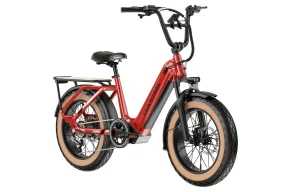
Fat-tire eBikes are an excellent match for riders who want to explore beyond smooth gravel. Their wide tires are especially useful on Northeast Florida’s sandy conditions, uneven campground roads, and trails that change from firm to soft without warning. The added traction can make a newer rider feel much more secure when the surface moves beneath the bike.
The trade-off is that fat-tire bikes are typically heavier and can feel less nimble than narrower-tire models. They also require a little more effort to load onto a vehicle rack. That said, the electric assist offsets much of the extra rolling resistance, and a properly sized hitch rack makes transportation much easier. If you want one eBike for pavement, gravel, grass, and sand, this is often the most versatile direction. GO EBIKES has hitch racks available including the Destination E from Hollywood Racks (https://hollywoodracks.com/collections/electric-bike-hitch-racks/products/destination-e) that includes a ramp for easier loading.
Full-Suspension eBikes for Rougher Trails
A full-suspension eBike is built for riders who prioritize comfort and control over the smoothest possible ride. With suspension at the front and rear, these bikes reduce the repeated jolts that can turn a long gravel route into an uncomfortable day. They are a strong fit for rough access roads, bumpy forest paths, and riders with sore backs, shoulders, wrists, or hips.
The trade-off is price and weight. Full suspension is not necessary for every gravel path, especially if you mainly ride maintained multi-use trails. But for riders who want to stay out longer and explore more challenging surfaces, it can be a meaningful upgrade rather than a luxury. Even if you do not plan to go full off road, the rear suspension adds a creature comfort that can’t be denied.
Step-Through eBikes for Easy Stops and Starts
Gravel routes often involve gates, trail crossings, photo stops, and unplanned breaks. A step-through frame makes getting on and off the bike easier, particularly for riders with limited hip or knee mobility. It can also be a practical choice when you are carrying a rear bag, basket, or extra layers.
A step-through design is not automatically less capable on gravel. What matters is the overall frame quality, tire setup, suspension, and rider fit. Many adults choose a step-through eBike because it feels more approachable while still delivering the power and range needed for real outdoor adventures.
Mid-Drive eBikes for Hills and Natural Pedaling Feel
If your gravel rides include elevation changes, longer distances, or frequent shifting between firm and loose surfaces, a mid-drive eBike deserves a close look. Because the motor works through the bike’s gears, it can provide efficient climbing support and a balanced, connected pedaling feel. Not to mention these bikes provide amazing torque. Take a look at the Mokwheel Onyx Mid Drive (https://goebikesfl.com/product/onyx-st-ebike/) and compare the specs.
For flatter Florida paths, a hub-drive eBike can still be a great value and plenty powerful for recreational gravel riding. A hub motor paired with pedal assist and a throttle makes it easy to get moving after a stop or power through a short patch of soft terrain. The right motor is less about chasing the biggest number and more about matching the bike to the way you plan to ride.
Battery Range Matters More Off Pavement
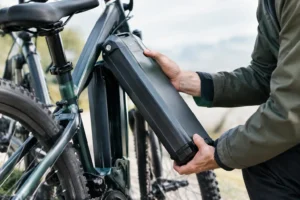
Gravel draws more energy than smooth pavement. Wide tires, loose surfaces, headwinds, rider weight, hills, cargo, and higher assist levels all affect range. A bike that easily handles a long paved ride may cover fewer miles when the trail is soft or rough.
Choose a battery with enough capacity for your typical route plus a comfortable margin. If you expect to ride 20 miles, do not shop as if a claimed 20-mile range is enough. Real-world conditions are rarely perfect, and most riders appreciate having extra battery available for a stronger assist setting on the way back.
Use pedal assist strategically. Lower assist on smooth, firm stretches preserves battery power, while higher assist can help when the surface gets loose or you are climbing. A throttle can be useful for restarting on gravel, but relying on it continuously will reduce range faster than active pedaling.
Comfort and Control Are Safety Features
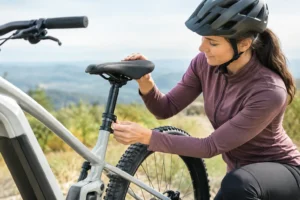
Gravel riding rewards a relaxed grip and a stable riding position. Look for handlebars that feel natural at your shoulder width, grips that reduce hand fatigue, and a seat that supports your sit bones without forcing you into one position. A test ride is the quickest way to tell whether a bike feels right.
Braking deserves just as much attention as motor power. Hydraulic disc brakes offer strong, predictable stopping performance in varying conditions, including wet gravel and sandy trail entrances. You should be able to reach the brake levers comfortably without stretching your fingers or locking your elbows. GO EBIKES only stock Mokwheel EBikes with Hydraulic Disc Brakes.
A helmet, mirror, and lights are practical additions for any mixed-surface ride. A mirror helps you stay aware when paths meet road crossings or shared routes, while lights make you more visible if a relaxed afternoon ride runs later than planned. For longer outings, a rear rack or basket keeps water, sunscreen, a light jacket, and repair essentials off your back.
How to Choose the Right Fit Before You Buy
The best way to narrow your options is to think honestly about where you will ride 80 percent of the time. A rider who spends most weekends on smooth rail trails may be happier with a comfortable all-terrain commuter. Someone who regularly encounters sand, uneven dirt, and campground roads may benefit more from a fat-tire model. If rough conditions and joint comfort are the biggest concerns, full suspension may be worth the investment.
Before making a decision, test ride the bike on pavement and pay attention to the basics: Can you stand over the frame comfortably? Is it easy to mount and dismount? Do the controls make sense? Does the seat height allow a confident stop? Does the bike feel stable when you accelerate and brake? Those answers matter more than a spec sheet alone.
At GO EBIKES, you can see the options in person, ask practical questions, and test ride before you make your decision. Free assembly and local support also mean your new eBike starts its first trail day properly adjusted, rather than arriving in a box with setup left to guesswork.
Your ideal gravel eBike should make the route ahead feel inviting, whether that route is a quiet crushed-shell path, a sandy park road, or the long way home after a great day outside. Choose the bike that feels comfortable enough to ride often, then give yourself permission to take the turn where the pavement ends.