A great ride can turn rough fast when a tire is soft, a chain is dry, or a battery was left baking in a Florida garage. This eBike maintenance guide focuses on the checks that keep Jacksonville-area riders rolling comfortably, safely, and with the range they expect. The good news: most of it takes minutes, not a full afternoon in the workshop.
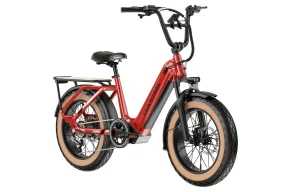
Whether you ride a step-through commuter to errands, take a fat-tire eBike onto sandy trails, travel with a folding model, or enjoy the extra stability of an electric trike, regular attention protects the investment and makes every ride feel better. Florida heat, sudden rain, salty coastal air, and fine sand simply mean your routine matters a little more.
Start Every Ride With a 60-Second Check
Before rolling out, give the bike a quick walk-around. Squeeze both brake levers. They should feel firm, not pull all the way to the handlebar. Check that the tires look properly inflated and that the wheels are secure. A low tire increases rolling resistance, shortens range, and makes handling less predictable, especially when turning on wet pavement.
Turn the bike on and look at the display for battery level or warning messages. Test the headlight and taillight if you will ride near dawn, dusk, or in rain. Then make sure the throttle, if your eBike has one, returns smoothly and that no cables are hanging loose near the wheels or crankset.
Listen during the first few minutes of the ride. Clicking while pedaling, rubbing brakes, or a new squeak are not always emergencies, but they are useful early warnings. Addressing a small adjustment before it becomes a worn part saves time and keeps your bike ready for the next outing.
Battery Care That Protects Your Range
Your battery is the heart of the electric system, and heat management is a big deal in Northeast Florida. Avoid leaving the battery in direct sun, inside a hot vehicle, or in an unventilated garage for long periods. Heat can reduce long-term battery health, even when the bike is not being ridden.
Charge with the charger designed for your battery and plug it into a dry, stable outlet. Let a battery cool down after a long, hard ride before charging it. Likewise, do not head straight out on a demanding ride with a battery that has just come off the charger in extreme heat. Giving it a little time to return to a normal temperature is a smart habit.
For regular use, charge as needed so you have enough range for your planned ride. If you will not ride for several weeks, do not store the battery completely empty. A partial charge is generally better for storage, and checking it occasionally helps prevent it from sitting too low. Follow the recommendations in your bike’s owner materials, since battery systems can vary by model.
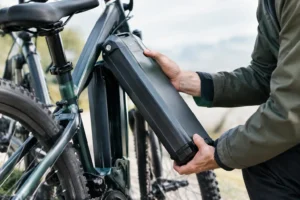
Keep battery contacts clean and dry. If you remove the battery for charging or transport, carry it carefully by its handle or secure grip points. Never lift the entire bike by the battery, and avoid dropping it. If the case is cracked, swollen, unusually hot, or damaged after a fall, stop using it until a qualified technician inspects it.
Rain Is Fine. Submersion Is Not.
Most quality eBikes are built to handle normal rain and wet-road spray. That does not mean they should be hosed down aggressively or left outside through every storm. Never use a pressure washer.
After a wet ride, wipe down the frame, dry the battery area, and pay extra attention to the chain and brake rotors. If you ride near the coast, salt air and road grit can speed up corrosion. A simple wipe after the ride is far easier than dealing with seized bolts or a rusty drivetrain later. A good trick to speed up things is to use a yard blower to remove excess moisture first, before wiping down.
Tires: The Simplest Way to Improve the Ride
Tire pressure affects comfort, traction, puncture resistance, handling, and battery range. Check it at least weekly, and more often if you ride several days a week. Use the pressure range printed on the tire sidewall as your starting point, then adjust within that range for your rider weight, cargo, and terrain.
Higher pressure generally rolls more efficiently on smooth pavement and can help maximize range. Lower pressure can add comfort and grip on loose sand, rough paths, and bumpy roads. The trade-off is that pressure that is too low can make the bike feel sluggish and may increase the risk of pinch flats or rim damage.
Fat tires give riders a lot of flexibility, but they still need attention. Look for thorns, screws, cuts, embedded glass, and worn tread. If you carry groceries in a rear basket, use a hitch rack, or add passenger and cargo weight where approved, check the rear tire more often. It is doing more work than it did on an unloaded ride. The majority of flats occur at the rear.
Keep the Drivetrain Clean and Quiet
Your chain, cassette, derailleur, and crankset transfer your pedaling effort to the rear wheel. On an eBike, they may experience higher loads because the motor adds power to every climb and acceleration. A dirty, dry chain wears faster, shifts poorly, and can make an otherwise smooth ride sound expensive.
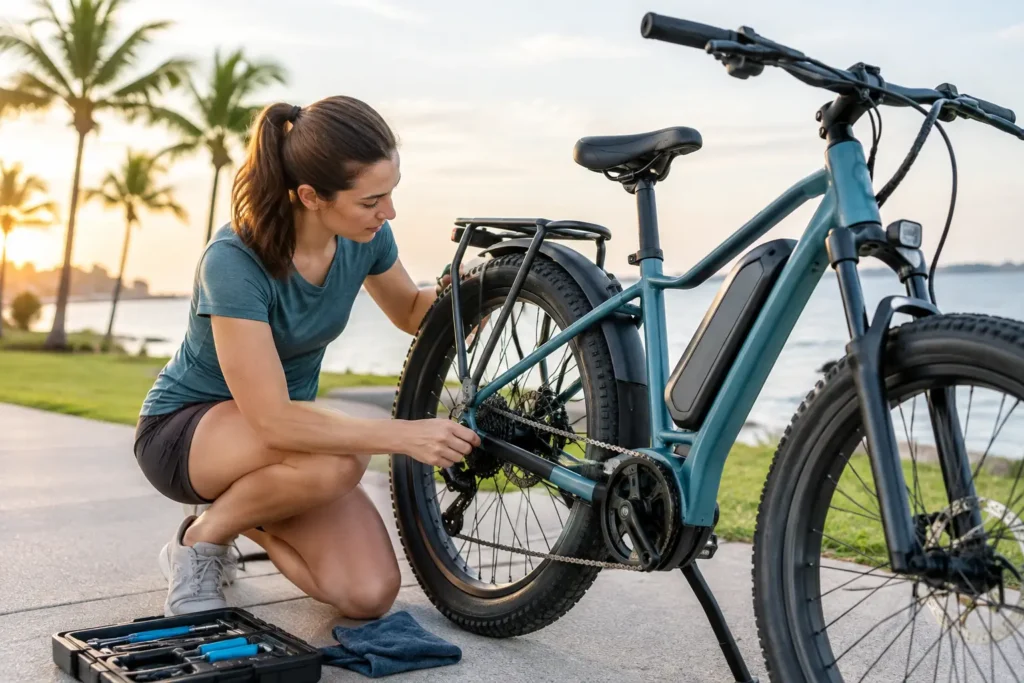
Wipe the chain with a clean rag after dusty or wet rides. When it looks dirty, use a bike-safe drivetrain cleaner, then apply a small amount of quality chain lubricant. Pedal backward while applying lube sparingly, let it settle briefly, and wipe away the excess. Extra lubricant attracts sand and grime, so more is not better.
If shifting becomes hesitant, do not keep forcing the pedals under heavy load. Ease off pedal pressure slightly while shifting, especially on hills. That small technique protects the chain and gears. A derailleur that is bent, noisy, or skipping under normal pedaling should be adjusted by a service professional before it creates further wear.
Give Brakes the Attention They Deserve
Electric bikes are heavier and often travel faster than standard bicycles. Reliable brakes are not optional. Check the brake lever feel before every ride, and inspect pads regularly. If you hear persistent scraping, squealing that does not go away after drying, or a metal-on-metal sound, schedule service promptly.
Do not spray lubricant near brake rotors or pads. Even a small amount of oil contamination can reduce braking performance. If you clean the bike, use products meant for bikes and keep cleaners and lubricants away from the braking surfaces. Dirty rotors can be wiped down with a clean rag and rubbing alcohol.
Riders who tackle bridges, carry cargo, ride with a trailer, or enjoy full-suspension trail models may wear brake pads faster. There is no single replacement schedule because riding style, terrain, weather, and rider load all matter. A local technician can inspect pad thickness, rotor condition, and hydraulic brake performance quickly.
Check Bolts, Accessories, and Contact Points Monthly
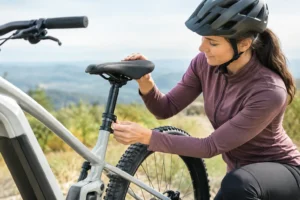
Once a month, inspect the parts that make your bike comfortable and practical. Check that the handlebar, stem, seat, pedals, racks, fenders, mirrors, basket mounts, and kickstand are secure. If your bike has suspension, look for oil residue around the fork or rear shock and make sure adjustment settings have not changed unexpectedly.
Use the correct tools and torque specifications. Tightening a bolt until it feels “good enough” can strip threads or damage lightweight components. This is especially true around handlebars, stems, seat clamps, and suspension parts. If you are unsure, have the bike checked rather than guessing.
Also inspect your helmet, lights, and hitch rack if you transport the bike. An eBike deserves a rack rated for its weight, and batteries should generally be removed before vehicle transport when practical. That reduces lifting weight and protects the battery from weather and road debris. It is also a theft deterrent. An eBike without a battery is far less appealing to a thief.
Know When to Bring It In
Some maintenance is perfect for home: cleaning, tire pressure, chain care, and visual checks. Other work is best left to trained hands. Bring your eBike in if the motor cuts in and out, the display shows an error, the battery will not charge normally, brakes feel weak, spokes are loose, or the bike has been involved in a crash.
A professional seasonal service is a smart choice for frequent riders, especially after a summer of rain, beach-area air, and long weekend rides. At GO EBIKES, a local service check can help catch brake wear, drivetrain stretch, firmware concerns, loose hardware, and fit issues before they interrupt your plans. GO EBIKES also offers an Annual Maintenance Service to keep your eBike in top shape.
Treat maintenance as part of the freedom your eBike gives you. A few calm minutes before and after rides keep your bike comfortable, dependable, and ready when a sunny Florida afternoon makes the long way home sound like the best idea.