A beach access road, a cracked neighborhood sidewalk, a long ride through Amelia Island, or a weekday trip to the store can feel completely different from the saddle. That is why the fat tire versus hybrid eBike decision is less about picking the “best” bike and more about matching the bike to the way you actually plan to ride.
For many Northeast Florida riders, either style can be a great alternative to short car trips and a much more enjoyable way to get outside. The difference comes down to surface conditions, riding distance, storage, handling preferences, and how much cushioned comfort you want under you.
Fat Tire Versus Hybrid eBikes at a Glance
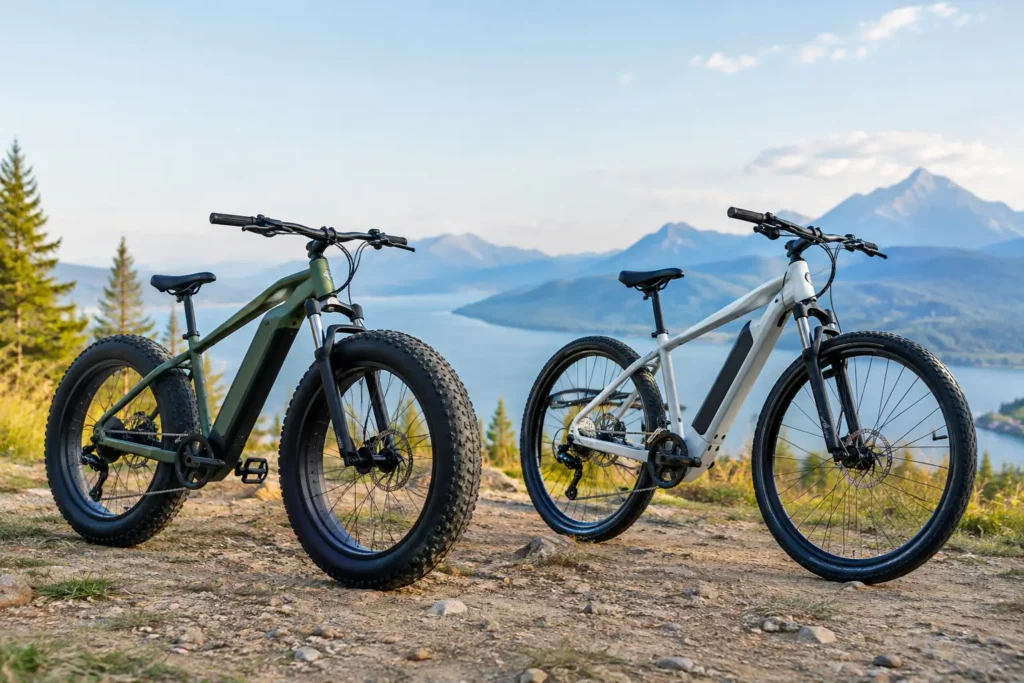
A fat-tire eBike is easy to spot. It typically uses tires around 4 inches wide, creating a larger contact patch with the ground. That width helps the bike float over loose sand, packed dirt, gravel, grass, and uneven pavement. Many fat-tire models also include suspension, upright handlebars, and powerful motors that make them feel stable and capable.
A hybrid eBike is the everyday all-rounder. It generally combines the comfortable, upright position of a city bike with tires that are wider and more forgiving than a traditional road bike but narrower than a fat tire. Hybrid tires are often around 1.75 to 2.6 inches wide, depending on the model. They roll efficiently on pavement while still handling bike paths, hard-packed trails, and ordinary neighborhood bumps.
Neither category is automatically more comfortable or more capable. A well-fitted hybrid with a quality suspension fork and comfort seat can be exceptionally pleasant on city streets. A fat-tire bike with the right tire pressure can be surprisingly smooth and controlled on pavement. The practical question is where you will spend most of your riding time.
Choose a Fat-Tire eBike for Confidence Beyond Pavement
Fat tires make sense when your route is unpredictable. If your favorite rides include sandy coastal areas, unpaved paths, rough grass, gravel driveways, or trails that change after a storm, the added tire volume provides meaningful traction and stability. You are less likely to feel every small rut or loose patch through the handlebars.
That extra grip is especially appealing to newer riders and adults returning to biking after time away. A wider tire can make slow-speed starts and stops feel more planted, which helps build confidence when carrying groceries in a basket, riding near pedestrians, or navigating uneven parking areas.
Where fat tires shine in Northeast Florida
Fat-tire eBikes are a natural fit for riders who want one machine for neighborhood roads and outdoor exploration. They handle hard-packed trail surfaces well, and lower tire pressure can improve comfort and traction when sand or loose terrain is involved. They are also a popular choice for riders who want a stable, relaxed platform for longer recreational outings.
The motor matters here, too. Wide tires create more rolling resistance than narrow ones, particularly on smooth pavement. A capable electric assist system helps offset that effort, so you can enjoy the stability of a fat-tire bike without feeling like every ride is a workout. Use pedal assist for steady cruising, then bring in more power for a bridge, headwind, or soft patch of ground. GO EBIKES has several Fat Tire models available for Test Ride, such as the Basalt ST 2.0 (https://goebikesfl.com/product/basalt-st-2-0/) or the Tor Plus (https://goebikesfl.com/product/tor-plus/) for those on a more stringent budget.
The trade-offs of fat tires
More tire is not free performance. Fat-tire eBikes are often heavier, wider, and less nimble than hybrids. That can matter if you need to lift the bike onto an RV rack, carry it up steps, fit it in a compact storage area, or weave through a crowded multiuse path.
They can also use more battery power at higher speeds because of their weight and tire resistance. Actual range depends on rider weight, terrain, wind, tire pressure, assist level, and cargo, but a hybrid often has an efficiency advantage on smooth roads. Fat tires also need enough clearance on your vehicle rack, so it is worth confirming compatibility before making a purchase.
Choose a Hybrid eBike for Everyday Miles
If most of your route is pavement, bike lanes, neighborhood streets, sidewalks where permitted, or maintained greenways, a hybrid eBike is often the easier daily choice. Its narrower tires roll with less resistance, helping the bike feel quicker and lighter when you turn, accelerate, or pedal with little assistance.
This is the style to consider for commuting, errands, casual fitness rides, and regular trips around Jacksonville, Yulee, and nearby communities. You still get the upright comfort and electric boost that make eBikes practical, but the ride feels more connected to the road and less like piloting a small off-road vehicle. At GO EBIKES, great models like the Tarmac ST (https://goebikesfl.com/product/tarmac-st/) fit this bill and are available daily for Test Rides.
Why hybrid handling feels different
A hybrid eBike typically changes direction more quickly than a fat-tire model. That makes it enjoyable for riders who value a responsive feel on neighborhood corners and shared paths. The tires usually create less road noise as well, which can make a longer paved ride feel calm and efficient.
A hybrid is not limited to perfect pavement. Most can handle occasional gravel, packed shell paths, and uneven streets without trouble. The limit appears when surfaces become loose, deep, or consistently rough. A narrow tire can sink more readily into soft sand, and it will transmit sharper impacts if the bike does not have suspension or a suspension seat post.
The trade-offs of a hybrid
A hybrid is not the best choice for frequent beach riding, loose sand, or rugged trail conditions. It can certainly manage a short unpaved section, but it does not offer the same float and forgiving traction as a true fat-tire setup. Riders who prioritize an ultra-plush feel may also prefer the cushion of higher-volume fat tires.
The right hybrid needs the right setup. For comfort, look beyond the tire width alone. Frame geometry, handlebar height, saddle shape, suspension, and proper bike fit have a huge effect on how your back, shoulders, and hands feel after an hour in the saddle.
Compare the Details That Matter Most
When deciding between these two styles, focus on your real-world routine rather than a single dream ride. Think about the routes you will take on an average week, where the bike will live, and whether you expect to transport it.
For riders who need to bring an eBike on a hitch rack, bike weight and tire width deserve serious attention. Fat-tire bikes may require a rack built for wider tires and higher weight capacities. A hybrid can be easier to load, though many electric hybrids are still substantial machines and should be handled with care.
Battery range should also be considered in context. If you mostly ride on level pavement at moderate pedal-assist settings, a hybrid can stretch battery power efficiently. If you ride a fat-tire eBike with low tire pressure in sandy conditions, expect to use more energy. That does not make the fat bike a poor choice. It simply means its strength is control on demanding surfaces, not maximum efficiency on smooth streets.
Your riding position is another deciding factor. Step-through frames make getting on and off easier for many riders, especially when stopping often or dealing with limited mobility. Full-suspension designs can add comfort on rougher terrain. A rear rack, front basket, mirrors, lights, helmet, and a comfortable seat can improve either bike more than many shoppers expect.
A Test Ride Makes the Choice Clearer
Specifications help, but they cannot tell you how stable a bike feels when you start from a stop, how naturally you reach the controls, or whether the seat supports you on a longer ride. That is where an in-person test ride becomes valuable.
Try the bike at slow speed, make a few turns, use different pedal-assist levels, and practice stopping. If possible, compare a fat-tire model and a hybrid back to back. Pay attention to how the bike feels through your hands and hips, not just how fast it accelerates. A bike that inspires confidence is the bike you will want to ride more often.
At GO EBIKES, riders can see the differences in person, ask practical questions about fit and accessories, and test ride before making a decision. Professional assembly and local guidance also help make sure your new eBike is set up for the way you plan to use it.
If your perfect Saturday includes sandy paths, uneven ground, and the freedom to take the scenic route, lean toward fat tires. If your ideal ride is smooth, efficient, and ready for everyday errands, a hybrid may be the better match. Bring your usual riding shoes, think about your most common route, and let the bike’s feel make the final call.