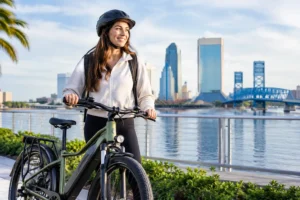
A campground can put you within a few miles of a waterfront cafe, trailhead, grocery store, or historic downtown, yet those short trips are often awkward in a large RV. A folding ebike for RV travel changes that equation. It gives you an easy way to leave the campsite without breaking camp, hunting for parking, or turning a simple errand into a drive.
The right bike is not simply the one that folds the smallest. RV riders need a model that fits the storage space they actually have, carries comfortably, handles the roads and paths they want to ride, and has enough battery capacity for spontaneous exploring. Get those details right, and your eBike becomes one of the most-used pieces of gear you bring along.
Why a Folding eBike Makes Sense for RV Life
An RV gives you the freedom to travel, but it is not always the best vehicle for getting around once you arrive. Campground roads can be narrow. Beach-town parking can be expensive. A quick trip for ice, coffee, or a forgotten dinner ingredient can mean packing up far more vehicle than the job requires.
A folding eBike lets you keep a compact transportation option close at hand. Fold it for storage inside the RV, in a pass-through compartment if the dimensions allow, or in a tow vehicle. Then unfold it at the destination and ride. Pedal assist helps you cover more ground without arriving sweaty, while a throttle can be useful when you are tired after a long travel day or easing away from a stop with cargo onboard.
For Northeast Florida travelers, this is especially useful around coastal campgrounds and state parks. Flat routes make relaxed cruising easy, while fat tires and a stable frame can add confidence on packed shell, uneven campground lanes, and sandy parking areas. Just remember that deep, loose sand is challenging for any bicycle, electric or not.
Start With Your Real Storage Space
Before comparing motors, colors, or top speeds, measure the place where the bike will live. This is the step that prevents a frustrating purchase. Measure the opening width and height of your storage bay, interior depth, and available floor space. Also account for the bike’s folded dimensions, not only its unfolded frame size.
Weight matters just as much as size. A heavier folding fat-tire eBike can feel planted and capable on rougher surfaces, but lifting it into a compartment may be difficult for one person. A lighter folding model is easier to manage but may have a smaller battery, narrower tires, or less cargo capacity. There is no universal winner. The best choice depends on whether you prioritize easy lifting, more rugged riding, or longer range.
Think about the full loading routine, too. Will you lift the bike over a storage lip? Roll it up a ramp? Carry it through the RV door? A folding bike that technically fits but is hard to load will not be nearly as convenient as you hoped. A local test ride and hands-on folding demonstration can reveal more than a specification sheet ever will.
Do Not Forget Battery Storage
Most eBike batteries are removable, which is a major advantage for RV travel. Removing the battery can reduce lifting weight and lets you charge it inside the RV or tow vehicle when appropriate. Keep the battery dry, protected from direct heat, and away from loose gear that could damage its terminals.
Avoid leaving a battery in extreme temperatures for long periods. Florida heat is a real consideration, especially when an RV storage bay sits in direct sun. Charge with the manufacturer-provided charger on a stable, dry surface, and do not make charging an afterthought just because you are on vacation.
Match the Bike to the Rides You Will Actually Take
It is easy to picture scenic all-day rides when shopping. But many RV owners will use their bike most often for short campground loops, beach access, grocery runs, and rides into town. Choose for your real routine first, then add capability for the adventures you genuinely plan to take.
A folding commuter-style eBike is a smart fit for paved roads, bike paths, and compact storage. It usually feels nimble and is easier to lift. Many folding EBikes are extremely small and light, but to actually ride them can feel extremely awkward. The Mokwheel Slate is an amazing folding EBike that offers versatility in a frame that does not feel drastically undesized.
Riders who want to carry groceries, beach gear, or a small pet carrier should pay attention to rear-rack capacity and compatible baskets. A rack is more useful when it is designed to handle real cargo rather than just a light jacket. Front and rear lights are also worth prioritizing. Campgrounds get dark quickly, and being visible on an evening ride matters.
Range Is More Than One Number
Published range estimates are helpful, but they are not a promise. Your actual range changes with rider weight, cargo, hills, wind, tire pressure, throttle use, assist level, and terrain. Riding through a headwind on a heavy bike with a loaded rack will use more battery than cruising a smooth path in low assist.
For many RV travelers, a larger battery offers peace of mind. You may not need maximum range every day, but having reserve capacity makes it easier to say yes to an unplanned ride. If you plan to boondock or camp away from hookups, consider your charging setup before relying on the bike for daily transportation. Some eBike systems and power-station-focused models can be especially appealing for travelers who value flexible energy options, but your charging plan should always match the equipment you carry.
Comfort Is a Travel Feature, Not a Luxury
Long driving days can leave hips, backs, and knees feeling stiff. Your eBike should make you want to move, not add another uncomfortable seat to your day. Step-through frames are particularly helpful for riders who prefer an easier mount and dismount, especially when wearing casual campground clothes or carrying a loaded rear rack.
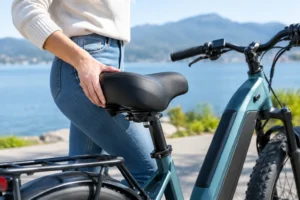
Look for an adjustable handlebar position, a supportive saddle, and tires suited to the surfaces you ride. A suspension seatpost can soften rough campground pavement without adding the bulk of a full-suspension bike. If you expect bumpy trails or rugged backroads, a suspension fork and wider tires may be worth the extra weight.
Fit still matters on a folding frame. You should be able to stand comfortably over the bike when needed, reach the controls without stretching, and put a foot down confidently at stops. Test riding before you make your decision is the simplest way to check those basics.
Plan for Safe Transport and Secure Parking
Folding does not automatically mean a bike is easy to transport. Inside storage is often the most protected option, but it requires padding and a way to keep the bike from shifting. Use straps designed for cargo, protect painted surfaces from rubbing, and secure loose pedals or accessories before travel days.
If you carry your eBike on an exterior rack, use a rack rated for the EBike’s full weight. Many standard bicycle racks are not built for heavier eBikes. Remove the battery before transport when the manufacturer recommends it, and use a fitted cover only if it is secured tightly enough not to flap or trap excess moisture. If you plan on hauling your EBike behind an RV, you should also make plans to have an RV Rated Hitch Rack. Wind and Vibration behind RVs is completely different than behind an automobile. That wind and vibration can eventually break a traditional hitch rack. GO EBIKES has an RV Rated Hitch Rack from Hollywood Racks that is designed to handle RV hauling.
At the campground or trailhead, a quality lock is essential. Lock the frame to a fixed object when possible, and consider locking through the rear wheel as well. Remove the display or battery if your model allows it and you will be away for a while. Simple habits protect an investment and keep your trip moving.
Accessories That Earn Their Space
RV storage is valuable, so every accessory should solve a real problem. A helmet, mirror, bright lights, and a dependable lock are safety essentials rather than extras. A rear basket or cargo bag makes the bike practical for errands, while a phone mount helps with navigation around unfamiliar towns. Front Baskets may seem like a great option, but can make folding up an EBike tricky or impossible.
A compact tire pump and basic repair kit are also smart travel companions. Check tire pressure before longer rides, because underinflated tires can reduce range and make handling feel sluggish. For riders using fat tires, a pump with an accurate gauge makes it easier to adjust pressure for pavement versus firmer off-road surfaces.
GO EBIKES can help RV riders compare folding models in person, practice the fold, and choose accessories that make sense for how they travel. Free assembly and local guidance can take the uncertainty out of buying a bike that needs to work on day one of the trip, not after a long setup session at the campsite.
Before your next departure, picture the first stop where you will want to ride instead of drive. Choose an eBike that you can store, lift, charge, and enjoy with confidence, and that short ride may become the best part of the day.