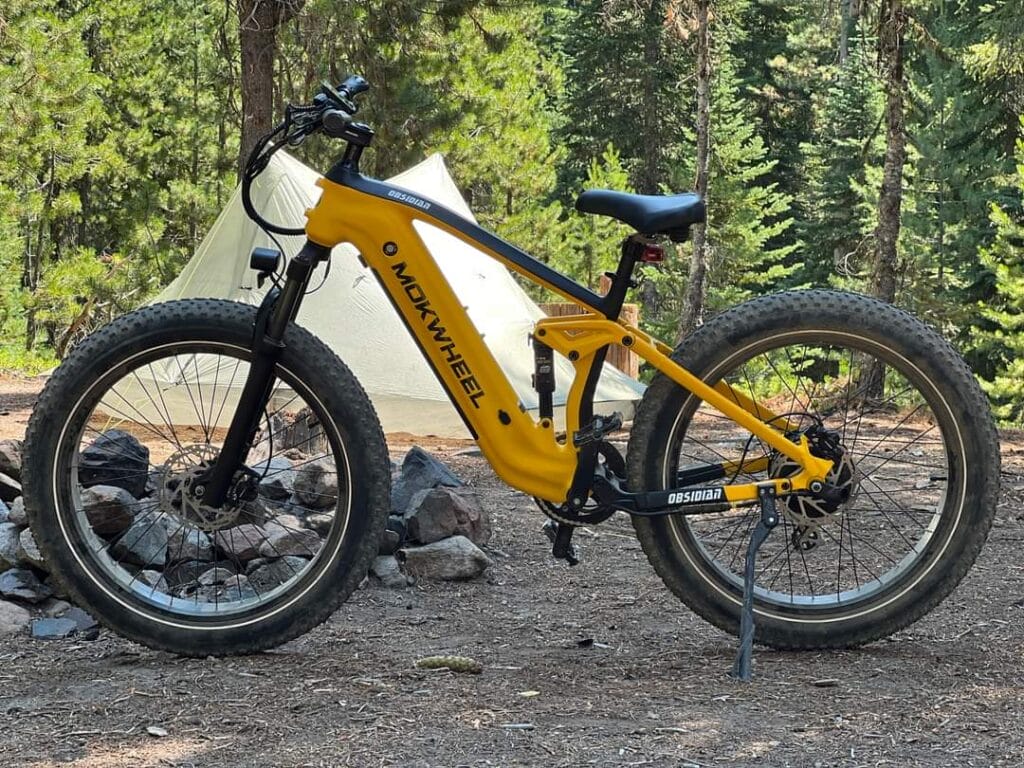
A washed-out trail, a sandy shoulder, broken pavement after a Florida storm – these are the moments that separate a basic eBike from a bike built to keep going. This Mokwheel Obsidian review looks at whether this big, full-suspension fat-tire eBike delivers the comfort, power, and confidence Northeast Florida riders expect from an adventure-ready machine.
The short answer is yes, for the right rider. The Obsidian is not trying to be a lightweight neighborhood cruiser. It is a substantial eBike for people who want to cover more ground, ride farther from the pavement, carry gear, and let the motor take some of the work out of headwinds, soft terrain, and long rides.
Mokwheel Obsidian Review: The Short Answer
The Mokwheel Obsidian is a strong choice for riders who want a powerful fat-tire eBike without giving up comfort. Its full-suspension frame, wide 26-inch tires, high-capacity battery, and 750W (1000W CONT) rear hub motor make it especially appealing for mixed terrain. Think neighborhood roads, crushed-shell paths, campground loops, hard-packed dirt, beach-adjacent routes where riding is permitted, and uneven trails.
It is also a good fit for riders who do not want every outing to feel like a workout they have to recover from. Pedal assist helps you maintain momentum, while the throttle can be useful for getting moving from a stop or taking a break from pedaling on a long stretch.
The trade-off is simple: all that capability comes with size and weight. The Obsidian needs more storage room than a folding eBike, and it is not the model most people will want to lift into a vehicle by hand. If your priority is a nimble bike for short errands, there are lighter options. If your priority is comfort and all-terrain confidence, the Obsidian earns serious consideration.
Power That Makes a Difference on Real Rides
The powerful rear hub motor gives the Obsidian the authority riders expect from a premium fat-tire eBike. On flat pavement, that power makes it easier to keep pace without arriving overheated. On a bridge, an overpass, or a loose trail section, it helps the bike continue forward instead of bogging down.
Power is only useful when it feels manageable, and that is where the pedal-assist levels and handlebar controls matter. You can use a lower setting when you want a more traditional bicycle feel, then increase assistance when the route gets tougher. Riders new to eBikes often appreciate that flexibility. You do not have to ride at maximum assistance just because it is available.
The Obsidian’s throttle adds another layer of convenience. It can help when pulling away from an intersection, getting started on a hill, or moving through an area where you would rather not put extra strain on your knees. Like any high-powered eBike, it is worth taking time to get comfortable in an open, low-traffic area before using higher assist settings around other people.
Local rules matter, too. E-bike access and speed regulations can vary by trail, beach area, park, and municipality. A responsible rider checks the rules for the specific place they plan to ride and uses the bike’s settings accordingly.
Full Suspension and Fat Tires Are the Main Event
The Obsidian’s full-suspension design is more than a specification on a product page. It is what makes the bike appealing to riders who are tired of feeling every crack in the pavement. The front and rear suspension work with the large-volume fat tires to soften chatter from rough roads, roots, gravel, and uneven trail surfaces.
That comfort can be especially valuable for older riders, recreational riders returning to cycling, and anyone dealing with stiff backs, wrists, or hips. It does not turn every trail into a perfectly smooth path, but it takes the sharp edge off rough terrain and helps the bike feel more planted.
The wide tires provide traction and stability, particularly on loose gravel, packed sand, grass, and damp ground. They also make the Obsidian feel reassuringly steady at lower speeds. That stability is welcome when carrying a rear rack bag, a basket, or other riding essentials.
There is a practical compromise. Fat tires have more rolling resistance than narrow commuter tires, especially when they are underinflated. Keeping the tire pressure appropriate for the surface makes a noticeable difference. A slightly lower pressure can improve comfort and grip off pavement, while a firmer setup can make pavement riding feel easier and extend range.
Battery Range Depends on How You Ride
The Obsidian is commonly configured with a large 48V, 19.6Ah battery, giving it the kind of capacity that suits extended recreational rides and longer commutes. That larger battery is one of the reasons this model stands out from entry-level eBikes with smaller packs.
Still, advertised range is not a promise for every rider or every route. A lighter rider pedaling steadily in a lower assist level on smooth roads will travel much farther than a rider using high assist, frequent throttle, soft sand, steep terrain, and a loaded rear rack. Wind also matters more than people expect, especially along exposed coastal roads.
For most owners, the useful question is not, “What is the maximum possible range?” It is, “Will this bike comfortably cover my normal ride with a safety margin?” For a commute, weekend exploring, or a day around a campground, the Obsidian’s battery capacity gives many riders that confidence.
Mokwheel’s power-station capability may also appeal to campers, RV travelers, and riders who want a bike that can support more than transportation. Availability of the inverter and related equipment can vary by package, so it is smart to confirm what is included before buying. For the right traveler, the ability to use stored battery power at camp is a feature that goes beyond a typical eBike.
Who Will Enjoy the Obsidian Most?
The best Obsidian rider is someone who sees an eBike as a vehicle for bigger days out. Maybe that means riding from home to a favorite trail instead of loading up the car. Maybe it means exploring a state park, traveling with an RV, or taking a long waterfront ride without worrying that fatigue will cut the day short.
It also suits commuters with less-than-perfect routes. If your trip includes cracked pavement, grass, gravel parking areas, construction detours, or roads with rough shoulders, the fat tires and suspension can make the ride much more pleasant than a rigid commuter eBike.
The bike may be less ideal if you live in a walk-up apartment, need to carry your eBike upstairs, or have limited storage. Its weight also means you should choose a hitch rack rated for heavy eBikes rather than assuming a standard bicycle rack will work. These are not reasons to rule it out, but they are decisions to make before bringing one home.
Setup, Fit, and Accessories Matter Here
A performance eBike should not be treated like a box that arrives at the door. Proper assembly, brake adjustment, tire setup, and handlebar positioning affect both comfort and safety. The Obsidian has enough power and mass that a correct fit is worth the time.
A test ride is the fastest way to decide whether its riding position feels right for you. Pay attention to how easily you can step on and off, how the suspension responds to your weight, and whether you can comfortably reach the controls. Try a few pedal-assist levels rather than judging the bike after one quick lap.
Accessories can make the Obsidian more useful from day one. A quality helmet, mirror, lights, rear rack bag, and lock are practical basics. Riders planning to explore farther may also benefit from a phone mount, water bottle solution, cover, and a hitch rack designed for the bike’s weight. At GO EBIKES, riders can see those options in person and get guidance on what actually fits their intended use.
The right eBike should make you think less about whether you can handle the route and more about where you want to go next. If the Obsidian feels comfortable beneath you on a test ride, give it a route that matches its personality: a little pavement, a little rough ground, and enough distance to let the ride open up.